

I’ll never forget the morning I realized my “eco-friendly” dream floor was turning into a series of miniature half-pipes. It was mid-summer, the air conditioner was humming, and my indoor humidity was a crisp 42%. By all accounts, those bamboo planks should have been lying as flat as a pancake. Instead, I was staring at edges that were curling up like old parchment paper. I felt like a failure. I had followed the proper moisture testing protocols, or so I thought, but here I was with a cupped floor and a mounting sense of dread. If you’ve been walking across your living room and feeling those raised edges under your socks even though your dehumidifier says everything is fine, I know exactly that sinking feeling in your chest.
The Hidden Moisture Battle Happening Beneath Your Feet
The biggest mistake I made early on—and it’s one I see neighbors make all the time—was assuming that the air in the room is the only thing that matters. We focus so much on keeping our floors from gapping or shrinking during the winter that we forget about the silent enemy: the subfloor. Cupping happens because of a moisture imbalance. If the bottom of your bamboo plank is wetter than the top, it expands at the base, forcing the edges upward. Even if your room feels dry, moisture could be wicking up from a damp crawlspace or a concrete slab that wasn’t properly sealed. When I first started DIYing, I skipped the precise floor leveling techniques and didn’t bother with a high-quality vapor barrier because I figured the sunroom stayed warm enough. That was a $3,000 lesson. Bamboo is notoriously finicky because, as the National Wood Flooring Association points out, it is technically a grass with a much more complex cellular structure than oak or maple, making it hypersensitive to these moisture gradients.
Is bamboo flooring just too much of a hassle to keep flat?
I get it. You’re probably wondering if you should have just gone with elegant tile designs instead, or if bamboo is inherently flawed. It isn’t, but it is demanding. It’s like owning a high-performance sports car; you can’t just put regular gas in it and hope for the best. We need to look deeper than just the humidity readout on your thermostat. Have you noticed your floors acting up more in certain rooms, or maybe near specific exterior walls? Drop a comment or reach out—I’d love to hear if your “low humidity” cupping is driving you as crazy as mine did. Before you start ripping up planks or installing new transition strips, we need to diagnose where that secret water is coming from. It might be time to look at how you achieve flawless floor leveling or if your subfloor is breathing when it should be sealed tight.
Track Down the Source of That Sneaky Water
Think of your bamboo plank like a slice of white bread. If you leave it on a damp kitchen counter, the bottom gets soggy and expands while the top stays dry. That physical tension has to go somewhere, so the edges pull up toward the ceiling. This is exactly what is happening when your room feels dry but your floor is cupping. You are not fighting the air; you are fighting the slab or the crawlspace underneath. I remember a project in a guest bedroom where the air was a perfect 45% humidity, but the bamboo was curling like a professional surfer’s wave. I pulled one board and found the plywood subfloor was sitting at 14% moisture, while the bamboo was at 7%. That 7-point difference is the absolute kill zone for bamboo flooring.
Grab a Meter Before You Grab a Pry Bar
The first thing I do now—before I even think about sanding or repairs—is use how to use a moisture meter before installing wood floors to get a real reading on the subfloor itself. You need to know how to measure subfloor flatness before you start installing because those little dips in wood or concrete act like microscopic ponds. They trap humidity right against the bottom of your planks, fueling that cupping effect even when your dehumidifier says everything is fine.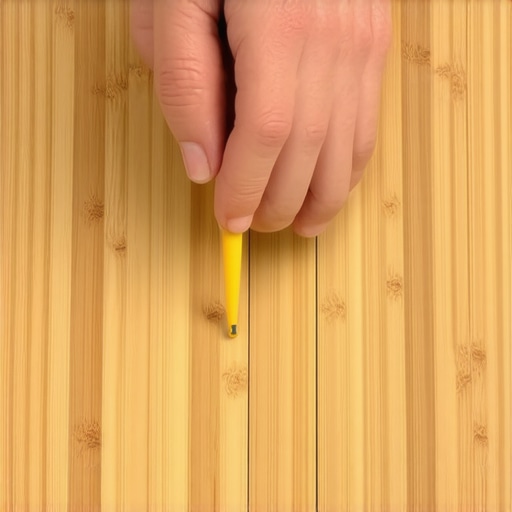
Stop Moisture Pockets with Better Prep
If you find that your subfloor is uneven, do not just throw down more underlayment and hope for the best. That is one of the major flooring installation mistakes to avoid for lasting results. I once tried to level a hallway that sloped toward a bathroom without properly sealing the concrete first. I used a self-leveler, but because I did not follow the precise floor leveling techniques to achieve flawless surfaces, the leveler actually absorbed moisture from the ground and fed it right into the new floor. Now, I always ensure a glass-smooth finish by knowing the secret to mixing leveler for a glass smooth finish and using a high-quality vapor barrier. This creates a literal wall between the ground’s dampness and your floor’s underside.
Why Your Leveler Might Be Making Things Worse
It sounds counterintuitive, but sometimes the very thing you use to fix the floor can cause cupping if it is not dry. I have seen many DIYers rush to install bamboo over freshly poured leveler. If the leveler has not fully cured, it is basically a giant wet sponge. You might even see why your self-leveler is bubbling over plywood if you do not prime it correctly, which leads to air pockets that hold moisture. When I was starting out, I ignored the dry time on the bag because the surface looked gray and hard. Three weeks later, my flat floor was a mess of ridges. Take the time to master flooring installation fundamentals: leveling for a seamless look, and always wait for those readings to stabilize before the first plank hits the ground.
The Industry-Standard Acclimation Period Is a Lie
Most contractors will tell you to let your bamboo sit in the room for 14 days and call it a day. In my experience, this is the single most dangerous piece of advice because it treats acclimation like a countdown clock rather than a biological process. If your home’s HVAC system isn’t running at the exact temperature and humidity you plan to live in year-round, those 14 days are completely wasted. Acclimation isn’t about time; it’s about reaching the Equilibrium Moisture Content (EMC). According to the Forest Products Laboratory, wood and bamboo only stop moving once they reach a state of balance with the surrounding air. If you install before that balance is hit, you’re basically inviting the floor to buckle or gap the moment the seasons change.
Don’t Let Your Adhesive Turn Into a Moisture Trap
One ‘oops’ factor I see constantly in DIY circles is the ‘more is better’ approach to adhesive. I once ruined a perfectly good hallway because I thought a thicker layer of glue would compensate for a slightly uneven subfloor. Wrong. Using the incorrect notch size—ignoring the trowel notch secret for getting full coverage—can actually trap moisture pockets directly against the bamboo. This is among the most common flooring installation mistakes to avoid for lasting results. Just as you’d learn why your large format tiles need back-buttering every time to ensure a void-free bond, bamboo requires specific adhesive ridges to allow for the natural expansion and contraction of the fibers. 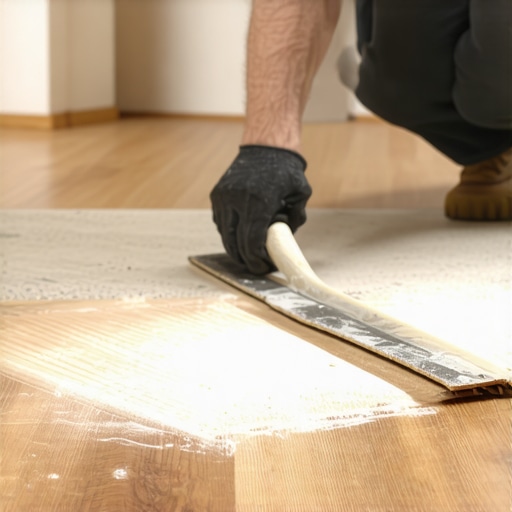
Can you actually save a cupped floor without sanding it to death?
The most common ‘pro’ advice for cupped edges is to sand them flat immediately. I’m here to tell you: stop. If you sand a cupped floor while the bottom of the plank is still holding excess moisture, you are committing flooring suicide. The moment the subfloor finally dries out, the wood will ‘reverse cup’ or crown, leaving you with a middle that bulges upward. You’ll have a permanent wave that no amount of hardwood floor care secrets can fix. The advanced move is to fix the moisture source and wait. It can take six months for the cell structure to relax, but a floor that cupped can often return to nearly perfect flatness if you give it time to breathe.
Why Patience Is Your Best Installation Tool
I see many homeowners jump straight to the sander because they see those curled edges and panic. But if you haven’t mastered mastering floor leveling pro secrets or addressed the humidity coming from your crawlspace, any repair is just temporary. Even the finishing stage requires a level of patience most people lack; rushing the dry times between coats is the primary reason why your hardwood polyurethane is peeling in sheets just a year later. It’s about respecting the material as a living, breathing thing. Have you ever fallen into the trap of rushing a project because you were tired of living in a construction zone? Let me know in the comments—I’ve definitely been there and paid the price.I used to think my eyes were the best tool in my kit, but after that bamboo disaster, I realized I am not a human sensor. If you are serious about this, you need a pinless moisture meter like the Lignomat Scanner D. Why pinless? Because I do not want to leave tiny vampire bites all over my expensive planks. I also keep a digital hygrometer—the Govee ones are cheap and sync to your phone—in the room for at least a month after the job is done. This isn’t just about the install; it is about monitoring the seasonal shifts. For example, the National Wood Flooring Association (NWFA) in their technical publication C100 specifies that for planks wider than 3 inches, the moisture content between the subfloor and the floor must be within a 2-point spread. That is a razor-thin margin. Knowing how to use a moisture meter before installing wood floors is the difference between a floor that lasts 30 years and one that fails in three months.
Stop guessing and start measuring with the right gear
Beyond the meter, I always recommend how to check for high spots with a 10 foot straightedge. If you can slide a nickel under that leveler, you are not done. I have seen guys try to use a 4-foot level, but it is like trying to see the horizon through a keyhole; you miss the long-range slopes that cause those annoying clicks and pops later on. Investing in the right tools is not an expense—it is an insurance policy. 
Keep the shine without ruining the wood
Once the floor is down and flat, the battle shifts to the surface. I have watched homeowners dump a bucket of soapy water on their new floors and I physically winced. You should never use a steam mop on click lock floors because that pressurized vapor is basically a moisture injection system for your seams. Instead, stick to a micro-mist of pH-neutral cleaner. For daily debris, find the vacuum attachment that actually picks up fine sawdust and grit. If you let sand sit on the surface, it acts like sandpaper under your shoes, grinding down the finish until it is dull and lifeless.
How do I maintain bamboo floors over time?
Maintaining bamboo is not just about cleaning; it is about environmental control. You need to treat your home like a humidor. If your humidity swings from 20% in the winter to 60% in the summer, your floor will eventually fatigue. If you do notice minor scuffs or a dulling of the factory finish, look into mastering hardwood floor refinishing expert tips for 2025 before the damage reaches the wood fibers. Often, a simple screen and recoat can bring back the luster without a full sand-down. And if you have made the mistake of using a wax-based polish that is turned cloudy, check out the simple hack for removing wax from new hardwood to reset your surface.
Why engineered bamboo is the future of flooring
Looking ahead, I predict we will see a massive shift toward cross-ply engineered bamboo. While strand-woven bamboo is incredibly hard, its density is its downfall when it comes to moisture movement. By layering the bamboo fibers in alternating directions—much like a high-end plywood—manufacturers are creating boards that are virtually immune to the cupping and gapping that plague solid bamboo. We are also seeing a rise in smart finishes that can self-heal minor scratches through heat-activated polymers. The days of worrying about every dropped fork are numbered. If you really want to level up your home value, look at hardwood floor care secrets to longevity and shine to keep your current investment pristine while we wait for these new techs to become affordable. My challenge to you: Go buy a cheap digital hygrometer today. Place it on your floor and watch it for 48 hours. If that number moves more than 10 points, it is time to look at your HVAC or crawlspace before you commit to any more repairs.
What Nobody Tells You About Bamboo’s Cellular Memory
Over the years, I’ve realized that bamboo isn’t just a product; it’s a temperamental material with a long memory. Here are the lightbulb moments that changed how I handle it:
- Acclimation is a dialogue, not a deadline. Throwing boxes in a room for two weeks is a gamble. You need to know how to use a moisture meter before installing wood floors to prove the bamboo and the subfloor are actually in sync.
- The surface lies to you. Just because your skin feels dry doesn’t mean the concrete slab isn’t sweating under your vapor barrier. Always assume the subfloor is trying to hydrate your bamboo from the bottom up.
- Step away from the sander. Sanding a cupped floor is usually a mistake you can’t undo. If you flatten a floor that is still wet at the bottom, you’ll end up with a “reverse cup” once it finally dries out.
My Go-To Gear for Taming Finicky Floors
You don’t need a warehouse full of tools, but you do need precision. Here is the kit I swear by for any bamboo or wood project:
- Lignomat Scanner D: This pinless meter is my best friend. It lets me check moisture deep in the plank without leaving holes that ruin the aesthetic.
- Govee Smart Hygrometers: I keep these tucked in corners to track humidity swings on my phone. If I see a 15% jump, I know I need to check my HVAC settings immediately.
- A 10-Foot Straightedge: You absolutely must know how to check for high spots with a 10 foot straightedge because even a tiny hump can create the tension that starts a cup.
Take Back Your Living Room from the Waves
It’s easy to feel defeated when your beautiful floor starts acting up, but remember that most bamboo issues are solvable with patience and the right environment. Once you stabilize the moisture levels, you can apply hardwood floor care secrets to longevity and shine to make those planks look better than the day they were installed. If the damage is deep, don’t panic; look into mastering hardwood floor refinishing expert tips for 2025 to bring that surface back to life. You’ve got this, and your floor is worth the extra effort. Have you ever noticed your floor edges curling even when your house felt bone-dry? Let me know in the comments what you found underneath!