I vividly remember the first time I attempted to tile a kitchen floor, expecting a quick project that would instantly upgrade my home. But as I laid down the tiles, I noticed a few were wiggling and some weren’t sitting flush. Turns out, my subfloor wasn’t as flat as I thought. That lightbulb moment taught me one crucial lesson: without a perfectly level foundation, even the most beautiful tiles can become a nightmare.
The Hidden Danger of an Uneven Subfloor
An uneven subfloor isn’t just an aesthetic issue; it can lead to serious problems down the line. Cracked tiles, loose grout, and even flooring failure are common symptoms of neglecting proper leveling before installation. Especially in 2026, where tile designs are more intricate and expectations for durability are higher, ensuring your subfloor is flat isn’t optional — it’s essential.
In my early days, I thought I could fudge the uneven spots with thinner layers of mortar or self-leveling compounds. Big mistake. These quick fixes often don’t last and can cause more harm than good. Over time, uneven surfaces can cause tiles to crack or pop loose, costing you more money and hassle later. To really get it right, I recommend following a proven checklist for assessing and preparing your subfloor that’s based on the latest expert advice.
Are you tired of dealing with uneven floors and tile mishaps? Don’t worry — I’ll walk you through exactly how to double-check your subfloor’s flatness, so you avoid costly troubleshooting in the future.
Could Your Subfloor Be Sabotaging Your Tile Project?
Many people overlook the importance of a solid foundation, only to regret it after tiles crack or grout lines gaps appear. I made this mistake early on, assuming a little bump wouldn’t hurt, only to face a tile disaster that took hours to fix. That’s why I advocate for a simple 2-minute test — yes, just two minutes — to verify your subfloor’s levelness before buying or laying any tiles. This quick step could save you from future headaches.
Supporting this approach, research shows that proper subfloor preparation can extend the life of tile installations significantly. For more detailed techniques on how to achieve a flawless surface, check out the comprehensive strategies outlined in [this ultimate guide to floor leveling](https://tiletrendshop.com/the-ultimate-guide-to-floor-leveling-for-a-perfect-finish). Now, let’s dive into how you can perform this essential check and prepare your floor for tile success.
Assess Your Subfloor Like a Pro
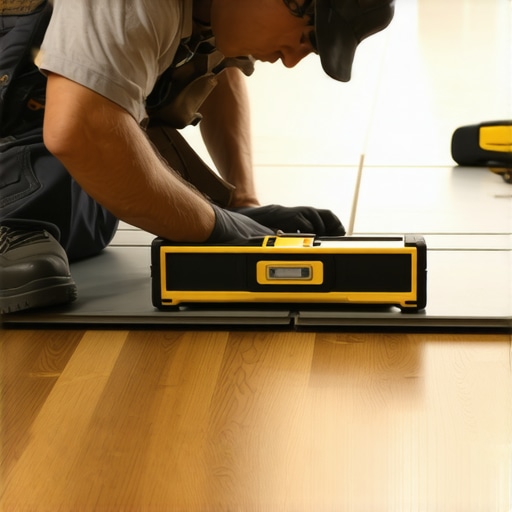
Start with a simple 2-minute test to gauge flatness. Grab a straight 2×4 board and a level—place the board across the subfloor in different directions. If you notice gaps beneath the board or the bubble isn’t centered, your floor isn’t perfectly flat. I did this once in my basement, and the unevenness was evident—the gap beneath the level was inconsistent, revealing high and low spots that would cause issues later on.
Identify High and Low Spots with Precision
Use a long straightedge or a level extending across the entire floor. Prop it in several locations; if you see gaps between the floor and the edge of the level, mark those spots with chalk. This gives you a clear picture of where your problem areas are. Think of it like a topographical map—knowing where peaks and valleys are allows targeted leveling, rather than unnecessary material application, saving time and costs. For more detailed techniques, visit this guide to precise floor leveling.
Prepare Your Surface Thoroughly
Remove debris, dust, and loose materials. Sweep and vacuum, then ensure the surface is dry. Sand down any protrusions or high spots with a concrete grinder or sander. This step ensures the leveling compound adheres properly. I once tried to skip the cleaning, and the compound didn’t bond well, leading to future cracks. Remember, a clean surface is your best friend in achieving long-lasting results.
Apply Self-Leveling Compound Strategically
Mix the compound as per manufacturer instructions. Pour it into low spots, starting from the farthest corner. Use a trowel or a gauge rake to spread the compound evenly across the surface. For larger areas, work in sections, adding more compound before previous sections fully cure. Think of it like icing a cake—spread it smoothly before it sets. Once dried, use a long straightedge or laser level to verify evenness. You can check this comprehensive approach for more guidance.
Double Check and Correct as Needed
After curing, re-verify levelness with your long straightedge or level. Address any remaining imperfections with additional compound or sanding. Remember, patience here pays off. I made the mistake of rushing and installing tiles over uneven ground, which resulted in cracked tiles and grout separation. Proper leveling now means fewer headaches later, especially with intricate tile patterns or hardwood planks.
Many DIY enthusiasts and even some so-called professionals subscribe to popular misconceptions about flooring installation that can jeopardize durable results. One prevalent myth is that thin or self-leveling compounds can magically fix an uneven subfloor. In reality, relying solely on these quick fixes often leads to future cracking and loosening, especially if the underlying issues aren’t properly addressed. For a comprehensive approach, I recommend mastering precise floor leveling techniques, which you can learn about in our detailed guide on precise floor leveling methods.
Another common misconception is that hardwood and tile floors are interchangeable in terms of preparation. While both require flatness, the specific nuances of each material demand different handling. Hardwood needs a stable, moisture-controlled environment with a perfectly leveled subfloor, whereas tile installation emphasizes the importance of surface flatness to prevent lippage and cracking. Overlooking these distinctions can lead to costly mistakes, which is why I encourage exploring expert hardwood floor tips to ensure you’re following the right procedures.
A more insidious trap is the misconception that floor leveling is an optional step. Many underestimate the impact an uneven subfloor has on installation longevity. Studies show that improper leveling can reduce the lifespan of your flooring by up to 50%. This is particularly critical with intricate tile patterns or wide plank hardwoods, where imperfections are highly visible. To avoid falling into this trap, consider implementing thorough assessments involving long straightedges and laser levels, as discussed in our ultimate guide to perfect flooring surface.
For seasoned installers, the question arises: How precise do your leveling techniques need to be to withstand real-world conditions over time? Advanced installers recognize that even small deviations can cause stress points, leading to tile cracks or floor squeaks. Incorporating concrete grinding or self-leveling compounds with proper surface preparation is vital. Experts highlight that correct application of these materials, combined with thorough surface testing, is the key to long-lasting beauty and durability. If you’re seeking to elevate your skills, check out expert strategies for leveling.
Lastly, many believe that subfloor preparation ends once the leveling is complete. But in reality, ongoing checks during and after installation are crucial, especially since environmental factors like humidity fluctuations can cause floor movement over time. Monitoring these changes and making adjustments can save you from future repairs. For in-depth advice on maintaining flawless surfaces, visit care secrets for longevity and shine.
So, have you ever fallen into this trap of overlooking the nuances in flooring installation? Let me know in the comments. Remember, understanding these hidden factors can make all the difference between a beautiful, durable floor and a costly mistake.Maintaining flawless flooring over time demands the right tools and techniques. One essential device I rely on is a laser level, like the DeWalt DW088LG, which provides precision that traditional bubble levels can’t match. Its accuracy ensures that hardwood or tile surfaces stay perfectly even, preventing issues like lippage or uneven wear. For measuring moisture levels, I use a pin-type moisture meter such as the Wagner MMC220, critical for assessing subfloor dryness before installation or refinishing, helping avoid future warping or buckling. In my toolkit, a high-quality ground-penetrating radar (GPR) scanner like the Aidrill GPR600 helps detect hidden moisture pockets or structural anomalies beneath the surface, informing better long-term maintenance decisions.
Routine inspections with these tools enable early detection of problems like moisture intrusion or foundation shifting, which can compromise flooring integrity. When I notice a slight warp or squeak, I typically verify with my laser level or moisture meter before considering repairs. This proactive approach saves me from extensive, costly work later.
Planning for future upgrades, I also leverage software like Floorify, which models different flooring layouts and simulates wear over time. Such visualization aids in choosing durable materials and layout patterns that stand up to daily use. Looking ahead, I believe that integrating smart sensors into subfloors to monitor humidity and movement will become standard practice, enabling even more proactive maintenance.
How do I maintain hardwood or tile floors over time?
Regular cleaning with pH-balanced solutions, avoiding excess water, and immediate attention to spills help preserve your floors’ appearance and structure. Applying protective coatings, like UV-resistant finishes for hardwoods, can prevent fading and surface damage. I recommend scheduling annual professional inspections that include moisture testing and structural assessments. Using the precise tools I mentioned not only ensures initial quality but also makes ongoing maintenance more manageable. For expert tips on refinishing or restoring floors, check out this guide on hardwood refinishing. Try incorporating a laser level into your routine—it’s a game-changer for maintaining perfect alignment and planning necessary repairs before problems escalate.
Lessons That Changed How I Approach Floor Leveling
One of the most eye-opening lessons I learned was that no quick fix can substitute for proper assessment. Early attempts at patching uneven spots with thin layers led to cracked tiles and future headaches. The key is patience—using precise tools like laser levels or long straightedges to identify high and low spots from the start.
Another revelation was realizing how environmental factors, such as humidity fluctuations, can subtly shift your subfloor over time. I now prioritize ongoing monitoring, which helps catch issues before they become costly repairs. This proactive mindset significantly extends the lifespan of both tiles and hardwood floors.
Finally, I learned that education is ongoing. Even experienced installers can benefit from updated techniques—like mastering the latest self-leveling compounds or advanced surface prep methods. Staying informed through expert resources ensures your flooring will endure the test of time.
Tools and Resources That Elevate My Flooring Projects
My essential toolkit includes a laser level like the DeWalt DW088LG, which provides unparalleled accuracy during installation. Moisture meters such as the Wagner MMC220 help me verify subfloor dryness, preventing future warping or cracking.
I also rely on deep-dive guides like this comprehensive guide to floor leveling to refine my techniques. For designing durable, beautiful floors, I consult expert advice found in this resource on expert strategies.
Embracing these tools and expert insights has transformed my approach from reactive to proactive, ensuring every project begins with a solid foundation.
Your Next Step Toward Building Beautiful Floors
Achieving a flawless floor isn’t an accident; it’s a deliberate process that requires patience, the right tools, and continuous learning. I encourage you to embrace each project as an opportunity to improve your skills and to prioritize thorough preparation in every step. Remember, a well-leveled subfloor not only enhances the appearance of your tile or hardwood but also significantly extends its durability and value.
So, are you ready to take your flooring installation to the next level? Dive into the techniques, tools, and resources I’ve shared, and see how a solid foundation can make all the difference. What’s your biggest challenge with leveling your floors? Share your experiences below—I’d love to hear your story!