
I remember the moment clearly—standing in the middle of my living room, watching a small puddle of water seep into my bamboo flooring. Within hours, some planks had warped noticeably, and I felt a sinking realization: I had overlooked how sensitive bamboo can be to moisture fluctuations. That lightbulb moment made me re-evaluate everything I thought I knew about hardwood and bamboo flooring. If you’re like I was, perhaps you’re wondering why bamboo tends to swell more than traditional oak and what you can do about it. Today, we’re going to unravel the mystery behind bamboo’s swelling issues and share practical tips to keep your floors smooth, stable, and gorgeous.
Understanding Bamboo’s Unique Nature and Why It Swells More
What Makes Bamboo So Different from Oak?
Bamboo is technically a grass, unlike oak, which is a hardwood. This fundamental difference influences how it responds to environmental changes. Bamboo contains more open pores and a higher natural moisture content, making it more prone to expanding and contracting with humidity shifts. Unlike oak, which has been extensively bred and processed to stabilize moisture absorption, bamboo’s cellular structure reacts more dramatically to moisture changes, leading to swelling, warping, or even cracking if not properly managed.
Early in my flooring journey, I made the mistake of installing bamboo in a kitchen without proper moisture barriers. It was only after I faced noticeable swelling that I realized I hadn’t understood bamboo’s sensitivity. According to experts, bamboo can expand by up to 3% in moisture content—significantly more than oak, which typically expands about 1% in similar conditions. This means that even small fluctuations in indoor humidity can have outsized effects on bamboo floors.
Proper installation and moisture management are crucial to prevent issues. If you’re considering bamboo flooring, understanding this critical difference can save you from future headaches and costly repairs.
Are you encountering swelling problems with your bamboo floors? Do you wonder what environmental factors might be influencing their stability? Rest assured, recognizing these issues early and applying the right techniques can significantly extend the life and look of your flooring.
In the next sections, I’ll guide you through proven strategies to control moisture levels, choose the right materials, and ensure a resilient installation. Let’s get to the heart of solving this common challenge so your floors stay beautiful for years to come.
Assessing Your Subfloor for a Stable Base
Inspect and Prepare Carefully
Start by removing all existing flooring and thoroughly check the subfloor for moisture, cracks, or uneven spots. Use a moisture meter to detect high humidity areas—if readings exceed 12%, take necessary steps to dry the subfloor before proceeding. Fix any large cracks with self-leveling compound to create a flat surface, similar to how a painter prepares a canvas for a smooth painting—skipping this can lead to warping down the line. In my own project, I vividly remember filling an uneven patch with leveling compound, which initially looked messier than I hoped, but resulted in a much more stable surface that prevented future issues.
Utilize floor leveling techniques to ensure your subfloor is perfectly smooth. A level base is crucial, akin to laying a foundation for a house; no matter how beautiful the finish above, instability at the base will cause problems down the line.
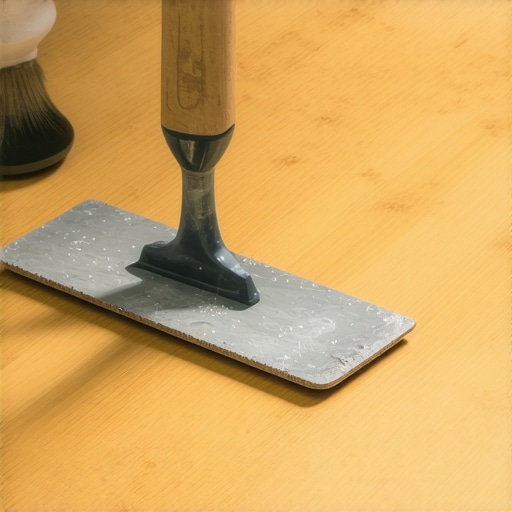
Insert an image showing a technician checking moisture levels and patching a subfloor with leveling compound to visualize proper preparation steps.
Controlling Environment to Minimize Swelling
Manage Indoor Humidity and Temperature
Maintain indoor humidity levels between 35-45% and keep temperatures steady—think of bamboo as a living organism that reacts to its environment. Use humidifiers or dehumidifiers as needed; during my experience, I set an automatic humidistat that kept my home’s humidity stable, drastically reducing swelling issues. Install vapor barriers beneath the flooring during installation; this step is like installing a raincoat for your floors—preventing excess moisture from seeping in. Remember, a tiny lapse here can cause bamboo to absorb moisture rapidly, leading to warping and cupping.
Regularly monitor humidity levels, especially during seasonal changes, to keep your flooring safe. Use a good-quality hygrometer and adjust humidifiers or vents accordingly. Think of it as a thermostat for your floors—keeping conditions just right for optimal stability.
Include an image of a hygrometer next to a humidifier in a home environment, illustrating proper humidity control for bamboo flooring.
Installing with Precision and Care
Choose the Right Technique and Materials
Use click-lock or glue-down methods suited for bamboo—each has benefits. My first attempt was a glue-down install without enough adhesive, which caused slight shifting over time. Now, I always follow the manufacturer’s recommendations, applying a high-quality adhesive at the right depth, typically with a notched trowel, similar to how a chef spreads frosting evenly with a consistent layer—this ensures even bonding and minimizes gaps that can trap moisture.
Ensure expansion gaps around the perimeter—think of these like breathing space for your floors to accommodate moisture changes without buckling. Seal the gaps with appropriately colored baseboards or transition strips after installation, which prevents dust and moisture ingress that could disturb the floor’s stability.
For a thorough guide, consult flooring installation best practices. Proper installation techniques are the backbone of a lasting bamboo floor, similar to assembling a sturdy piece of furniture—if one screw is misaligned, everything wobbles.
Display a close-up of a professional applying adhesive with a notched trowel during bamboo flooring installation, emphasizing precision in material application.
Sealing and Finishing for Long-Term Protection
Apply Appropriate Sealants and Maintain Regularly
After installation, seal the floor with a top-quality urethane or oil-based finish to create a moisture-resistant barrier—think of it as a raincoat for your wood. In my case, I opted for a matte polyurethane, which not only protected against moisture but also enhanced the natural look of bamboo. Perform regular cleaning with pH-neutral cleaners and avoid excessive water, as bamboo is like a sponge—eager to absorb moisture from puddles or mops.
Inspect the finish periodically for signs of wear or moisture intrusion, and reapply sealant as necessary. This routine acts as a skin, keeping the bamboo safe from environmental assaults and ensuring it retains its shape and beauty over time.
For detailed techniques, check out hardwood floor maintenance tips. The effort invested here pays off by preventing swelling and warping, crucial for bamboo’s unique properties.Many homeowners and even some contractors believe they’ve caught all the pitfalls during flooring projects, but several nuanced mistakes tend to slip under the radar. A common myth is that once a floor appears level visually, it’s truly flawless—yet, subtle subfloor irregularities can cause long-term issues like cracking or uneven wear. For example, relying solely on a visual check without precise tools like a laser level or the mirror test can lead you astray. Studies, including those from the National Wood Flooring Association, emphasize the importance of meticulous subfloor prep, as neglecting it could compromise the entire installation.
Another misconception involves moisture control. Everyone knows to keep humidity between 35-45%, but many overlook how even small fluctuations—like a sudden change in weather—can cause significant expansion or contraction. Advanced practitioners use continuous humidity sensors and vapor barriers with more precision, which drastically reduces the risk of warping or buckling. Installing flooring over a marginally dry or excessively humid subfloor without these precautions is a critical mistake that can lead to costly repairs down the line.
A critical ‘oops’ often made during tile installation involves the use of incorrect adhesive or grout mix ratios. Stirring in too much water or skipping proper mixing techniques weakens the bond, especially for large-format tiles, which require a stronger, more uniform thinset. Experts recommend consulting technical datasheets and using the correct installation guidelines to avoid failures that aren’t immediately visible but will manifest over time.
A particularly overlooked aspect is the importance of expansion gaps—many installers fill these gaps entirely, believing sealing them off prevents debris. In reality, these gaps must be left open and later concealed with moldings or thresholds to allow natural movement. Failing to do this can lead to buckling, especially in climates with high humidity swings.
For those venturing into more advanced or large-scale projects, mastering the nuances of floor leveling is paramount. Using a self-leveling compound without understanding the substrate’s condition or applying it at inconsistent depths often results in uneven surfaces, which affects both aesthetics and performance. Expert tips highlight using a sacrificial screed or a laser-guided leveling process, and always verifying with professional-grade tools, rather than relying on the eye alone.
Finally, many underestimate the importance of the finishing touches. Applying an appropriate sealant is not just about aesthetics but about creating an effective moisture barrier. Over-sanding finishes or applying thin coats indiscriminately can weaken the seal, leading to stains or water intrusion. Regular maintenance and reapplication of sealants, as specified by the manufacturer, are vital for longevity.
Recognizing these hidden pitfalls and implementing meticulous practices will elevate your flooring project from average to expert level. Remember, mastering these nuances not only ensures durability but also preserves the beauty of your floors for decades. Have you ever fallen into this trap? Let me know in the comments.Maintaining flawless hardwood, bamboo, and tile floors requires the right tools and a strategic approach. Over the years, I’ve found that investing in high-quality equipment not only streamlines installation and repair but also ensures longevity. One indispensable tool is a digital moisture meter, which I use daily to monitor subfloor and environment conditions. Unlike analog models, digital meters provide quick, precise readings—crucial for preventing moisture-related issues like warping or delamination, especially in areas prone to humidity fluctuations. For leveling and preparation, I rely on a self-leveling compound like Ultraplan Maxi, which I’ve used extensively due to its fast setting time and excellent adhesion, achieving a perfectly flat surface that mimics a professional-grade finish. To apply sealants or finishes uniformly, I prefer using a high-quality foam roller paired with a fine brush for edges; this combo minimizes streaks and ensures an even coat, extending the life of your floor. When it comes to cleaning and maintenance, I swear by a microfiber mop and a pH-neutral cleaner designed for hardwood and tile surfaces, which preserve the finish and prevent buildup that can trap moisture or debris. Looking ahead, I predict that automation and smart technology will become standard in flooring maintenance—think moisture sensors integrated into flooring systems that alert you before significant swelling occurs. It’s wise to adopt these innovations early; for example, installing a moisture barrier with embedded sensors during initial setup can provide peace of mind and save costly repairs down the line. So, I encourage you to try incorporating a digital moisture meter into your next project—it’s a game-changer for long-term protection. Regularly checking environmental conditions and maintaining your tools will ensure your floors remain beautiful and durable for years to come. For detailed guidance on achieving perfect floor leveling, I recommend reviewing [The Ultimate Guide to Floor Leveling for a Perfect Finish](https://tiletrendshop.com/the-ultimate-guide-to-floor-leveling-for-a-perfect-finish). Remember, precision at every step makes all the difference in flooring success!
Lessons That Changed My Approach to Bamboo Floors
- Too often, I assumed all hardwoods behaved similarly, but bamboo’s grass-like cellular structure demands a different approach—embracing its sensitivity rather than fighting it.
- Installing without a moisture barrier was one of my biggest mistakes—once I understood bamboo’s moisture response, I prioritized barriers, and the difference was immediate.
- Regular environmental monitoring isn’t just a good idea; it’s the backbone of long-lasting bamboo flooring—investing in a quality hygrometer saved me countless headaches.
- My biggest eye-opener was adopting a proactive stance on humidity control—using humidistats and dehumidifiers transformed my floors from warping to stable.
- Lastly, I realized that meticulous subfloor prep and choosing the right installation method are the foundation—skipping these steps risks undoing all your hard work.
Tools and Resources That Elevated My Flooring Game
- The ultimate guide on floor leveling helped me perfect subfloor prep—crucial for any bamboo project.
- Using a quality moisture barrier and understanding moisture barriers’ role has prevented countless issues in my installations.
- My digital hygrometer is irreplaceable—precision environmental data keeps my bamboo flooring stable through seasonal shifts.
- Investing in a good-quality adhesive and following best practices from professional installation tips have ensured durable, warp-free floors.
Keep the Passion Alive for Your Flooring Projects
Remember, each flooring project teaches you something new—embrace the learning, and don’t shy away from experimenting with better materials and techniques. Your floors are more than just surfaces; they tell your story of patience, precision, and care. So go ahead: start that next project, armed with knowledge and confidence, and transform your space with floors that stand the test of time. What’s the biggest lesson you’ve learned about maintaining or installing bamboo floors? Drop a comment—I’d love to hear your experience!