I’ll never forget the moment I first heard that unmistakable clicking sound in my living room. It was late at night, and I was just settling into my favorite chair when that tiny, rhythmic tick-tick-tick started echoing through my home. At first, I thought I was imagining things, but then I realized—my luxury vinyl plank flooring was making noise, and I had no idea why.
This recurring click has become a familiar frustration for many homeowners in 2026. Despite advances in flooring technology, it’s surprisingly common to hear these sounds, and often, they’re a sign that something’s not quite right beneath the surface. Don’t worry—you’re not alone, and there are simple, practical steps to address this issue.
Why Is My Luxury Vinyl Flooring Clicking
Understanding the root causes of this problem is the first step toward a long-lasting fix. In my experience, there are three main reasons your luxury vinyl might be clicking. These are often related to installation missteps, subfloor issues, or environmental factors. Recognizing these can save you from ongoing discomfort and potential damage down the line.
Is It Worth Worrying About Sounding Floors?
Honestly, I made the mistake early on of ignoring these noises. I thought they were just cosmetic quirks, but neglecting them can lead to more severe problems like buckling or gaps. According to flooring experts, ignoring clicking sounds can compromise the durability of your floor and even reduce your home’s value. So, it’s definitely worth paying attention to.
If you’ve experienced similar odd noises in your home and wondered whether it’s just a quirk or a sign of bigger trouble, you’re not alone. I’ll walk you through the common causes and practical solutions, starting with the most frequent culprit—subfloor instability—so you can decide on your next move with confidence.
Identifying the Root of the Clicks
Secure the Subfloor First
Start by inspecting your subfloor. Use a long level or straightedge to check for dips or uneven areas—imagine testing a surfboard’s flatness; if it wobbles, issues are lurking. If you spot dips, mark them with chalk, then remove the baseboards or transition strips for better access. Carefully lift sections of the vinyl to expose the subfloor. Resting your level across the surface will reveal high or low spots needed correction.
Identify and Address Moisture or Debris
Before proceeding, check for moisture or dust accumulation—these can cause floors to shift and click. Use a moisture meter on the subfloor, especially in humid areas; high readings signal the need for drying or sealing. Clean everything thoroughly with a vacuum or damp cloth, removing debris that might cause movement. Proper cleaning ensures your leveling compounds and adhesives bond effectively.
Level the Subfloor to Eliminate Movement
If dips are present, apply a self-leveling compound. Pour the mixture slowly into dips, spreading with a trowel or a smoother tool—like patching a pothole in a driveway. For large low spots, use multiple coats, allowing each to cure per manufacturer instructions. This replaces unevenness with a smooth surface, reducing wiggle and click when walking over the vinyl.
Check for Proper Adhesion and Seal Edges
Once leveled, ensure the vinyl is well-adhered. Re-glue any loose sections with quality flooring adhesive. Pay special attention to edges and seams, pressing them firmly to the subfloor. If seams are lifting, small amounts of adhesive or seam sealers can prevent movement, which often causes clicks. Properly sealed edges act as a barrier against shifting noises.
Reinstall Correctly and Securely
Lay the vinyl back in place, pressing firmly to eliminate air pockets and ensure tight contact. Use a roller to smooth out any bubbles or wrinkles, much like rolling out dough—uniform pressure distributes adhesion evenly. Confirm all sections are flat and securely attached, avoiding gaps or lifting, as these can create clicking when weight is applied.
For detailed guidelines on professional installation techniques, explore installing tiles like a pro or learn about precise floor leveling methods to ensure your vinyl stays quiet and stable over time. If issues persist, consider consulting flooring experts via contact us for tailored advice.
<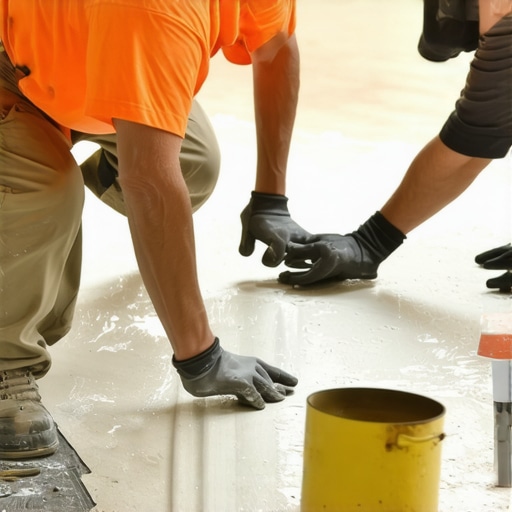 >Many homeowners assume that proper flooring installation is simply about laying materials evenly. However, what most people overlook are the nuanced factors that can dramatically compromise long-term durability. For instance, the myth that a perfectly smooth surface guarantees a lasting floor is misleading. Surfaces can appear flawless but hide underlying issues like subfloor instability or moisture problems, which can cause future cracks or squeaks. Advanced flooring experts emphasize the importance of thorough subfloor assessment before installation, as neglecting this step can lead to costly repairs down the line, as detailed in industry studies. Moreover, shallow understanding of floor leveling often leads to quick fixes that only mask deeper problems. Using a laser level or professional-grade tools for precise assessment ensures accuracy, but many skip this step under the assumption that DIY methods suffice. This oversight can result in uneven surfaces and movement noises. An often-unspoken nuance is the role of thermal expansion in flooring materials. Variations in temperature and humidity cause floors to expand or contract, and ignoring this can lead to buckling or gaps. Proper expansion gaps and acclimation procedures are critical, yet frequently neglected.
What do experts know about moisture’s impact on floor leveling that laypeople overlook?
Moisture infiltration beneath the slab or subfloor can undermine adhesives and leveling compounds, leading to cracks or vertical shifts over time. A comprehensive moisture test, as recommended in the ultimate guide to floor leveling, is essential to detect hidden dampness. Without this step, even well-laid floors risk failure after just a few years. Remember, superficial fixes might seem cost-effective initially, but understanding these intricate details ensures the integrity and longevity of your flooring investment. Always seek expert advice when in doubt; professionals can detect subtle issues that DIY assessments might miss. To avoid these common pitfalls, consider consulting specialists through our contact page. Thinking ahead and investing in proper assessment and preparation will save you from the Oops moments many homeowners face. Need a detailed step-by-step approach? Explore advanced leveling techniques for guaranteed smoothness. Have you ever fallen into this trap? Let me know in the comments.Maintaining your floors over time requires the right tools that combine precision, durability, and ease of use. One of my go-to instruments is a high-quality digital moisture meter, which I personally rely on to detect hidden dampness beneath the surface—a critical step emphasized in the ultimate guide to floor leveling. Accurate moisture readings prevent bonding issues that can lead to squeaks or cracks years down the line. Additionally, I recommend investing in a laser level; it’s an indispensable device for assessing subfloor flatness with remarkable precision. Unlike traditional bubble levels, laser levels project a continuous line across the surface, making it easier to identify dips and high spots from a distance—saving time and improving accuracy. For the actual application of self-leveling compounds, I keep a quality trowel and a spiked roller in my toolkit. The trowel helps in spreading leveling compounds evenly, while the spiked roller removes trapped air, ensuring a smooth, uniform surface. When it comes to ongoing maintenance, a microfiber mop paired with gentle cleaning solutions keeps hardwood and tile floors looking their best without causing damage. As we look to the future, tools integrating smart technology—like IoT moisture sensors—may offer real-time data, alerting homeowners before small issues become costly repairs. This evolution promises to make floor maintenance even more efficient.
How do I maintain my flooring setup to ensure longevity?
Regular inspections with these specialized tools can catch minor problems early. For example, periodically testing moisture levels beneath the surface prevents unseen dampness from compromising adhesives, as detailed in expert flooring installation techniques. Also, using a laser level during routine checkups helps identify uneven areas before they cause visible cracks or gaps. Implementing this proactive approach, combined with proper cleaning and careful usage, greatly extends the life of your investment. For those interested in elevating their DIY skills, I recommend practicing with a high-grade self-leveling compound, applying it in thin, controlled layers, and then using a spiked roller to ensure proper bonding and surface smoothness. As this technology develops further, I predict that automation and AI-driven diagnostics will become common, making maintenance even more straightforward. Ready to try one? Use your laser level next weekend to verify the flatness of your subfloor before laying the next section of flooring—this small step can save you significant trouble later. For more expert insights and professional-grade tools, don’t hesitate to reach out via our contact page. Proper tools and routine checks are your best allies in keeping floors flawless for years to come.
The Hard-Won Lessons That No One Tells You About Floor Fixes
One of the most surprising insights I gained was that even premium materials are only part of the equation; proper subfloor assessment and preparation are truly the unsung heroes of successful flooring projects. I once underestimated how deeply moisture infiltration could undermine my whole effort, leading me to revisit and reinforce my moisture testing routine—since then, I’ve seen far better results. A mistake I hope others avoid is rushing through leveling steps, believing quick fixes will solve deeper issues; patience and proper technique always pay off in the long run. Lastly, understanding how environmental factors like humidity influence expansion and contraction has radically changed my approach to installation timelines and acclimation procedures—this knowledge is priceless when striving for silence and stability.
Tools and Resources That Changed My Approach
My top recommendation is a high-precision digital moisture meter; it’s been invaluable in detecting hidden dampness that can wreak havoc down the line. Equally vital is a laser level—far more accurate than traditional bubble levels—for ensuring flatness and catching dips early. For practical application, I rely on a quality self-leveling compound combined with a durable trowel and a spiked roller, which together guarantee smooth, secure surfaces that won’t click or shift. To deepen my understanding, books like The Ultimate Guide to Floor Leveling have been a game-changer, packed with professional insights on long-lasting results. If you’re serious about flooring, consulting experts through our contact page can save you from costly mistakes and provide tailored advice for your space.
The Courage to Take the First Step
Investing in quality tools and understanding the intricacies of proper installation can seem daunting but remember—every expert was once a beginner. Your journey to a tranquil, long-lasting luxury vinyl floor begins with curiosity and a willingness to learn. Embrace the process, stay proactive with routine checks, and don’t hesitate to seek professional guidance when needed. Your home’s comfort, quietness, and durability are worth every effort. So, why wait? Take that first step toward mastering your flooring project today, and transform your living space into a sanctuary of stability and style. Have you faced challenges with subfloor prep or moisture testing? Share your experiences below—we can learn from each other’s victories and lessons alike.
I recently had a similar issue with my vinyl floors clicking unexpectedly, and after doing some research, I realized I overlooked the importance of proper subfloor preparation and moisture testing. It’s interesting how such small factors can cause long-term problems like noise and even damage. I’d love to hear from others whether they’ve used moisture meters or laser levels during their installation—did it make a noticeable difference? I’ve started using a digital moisture meter, and it’s been eye-opening how much dampness can hide beneath the surface. I think one of the most overlooked aspects is environmental control; I’ve noticed that fluctuations in humidity really affect how the floors settle over time. Do others have tips for maintaining stable indoor conditions to prevent these sounds? I believe investing in good tools and knowledge can really save us from costly repairs later on, and this article hits the nail on the head about thoughtful preparation being key to long-lasting floors.