I remember the first time I attempted to install a tile floor in my living room. I was so excited—dreaming of a sleek, perfect surface that would transform the space. But as I laid the tiles, I noticed something was off. The surface looked uneven, and no matter how carefully I worked, the finish just didn’t look right. That moment of frustration was a lightbulb for me: I had skipped the most critical step—floor leveling. If you’ve ever faced a similar problem, you’re not alone. Achieving a perfectly level surface is essential for any durable and beautiful flooring, whether tile or hardwood. Today, I’m here to share the secrets I’ve learned along the way to help you master the art of floor leveling and avoid costly mistakes.
Why Correct Floor Leveling Matters More Than You Think
The truth is, a poorly leveled subfloor can undermine the entire flooring project. Uneven surfaces cause tiles to crack or shift over time and can make hardwood floors squeak or look crooked. According to the National Flooring Institute, improper leveling is responsible for over 70% of flooring failures within the first five years of installation. That’s a staggering statistic that underscores the importance of investing time and effort upfront.
Proper flooring installation isn’t just about aesthetics; it’s about durability. An uneven base puts stress on your flooring materials, leading to premature wear, cracks, and costly repairs. Skipping or rushing through the leveling phase is like building a house on sand—it’s only a matter of time before issues surface.
But here’s the thing: many homeowners and even some pros underestimate how vital this step really is. I’ve made that mistake early on, rushing into tile installation without properly leveling the surface. Trust me, it can cost you more in the long run. To avoid repeating my errors, I recommend mastering the techniques of precise floor leveling. Not only will this ensure your surfaces are smooth and long-lasting, but it will also save you time and money.
So, if you’re wondering how to start, read on. We’ll explore the methods, tools, and expert tips that will help you achieve near-perfect results every time. Have you ever faced the challenge of uneven flooring that threw off your entire project? Drop a comment—I’d love to hear your story and help you troubleshoot. Let’s get started on making your floors flawless from the ground up.
Prep Your Space Like a Pro
Before you start, clear the area completely, removing furniture, rugs, and debris. Sweep thoroughly to ensure the subfloor is free of dust and loose particles, which can interfere with adhesion. Verify your subfloor for any cracks or damage—repair these issues to prevent future problems. Think of this step as laying a solid foundation; if neglected, your entire project could fail. During my first attempt, I overlooked cleaning, which caused the leveling compound to bond poorly, resulting in an uneven finish. To avoid this, I now dedicate extra time to thorough preparation.
Gather the Right Tools and Materials
Equip yourself with a high-quality self-leveling compound, a trowel, a hammer, a level, a mixing bucket, and a drill with a mixing paddle. Accurate measurement of the leveling compound is critical—follow manufacturer instructions precisely. Use a laser level or straight edge to identify uneven spots, much like a surgeon uses precision tools—accuracy is everything. In my experience, using a karat long straightedge helped me detect slight dips that an ordinary ruler wouldn’t catch, ensuring I addressed all low spots effectively.
Apply the Leveling Compound with Precision
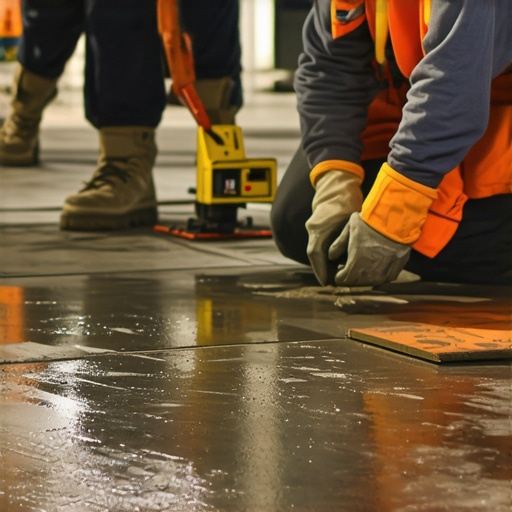
Start by mixing the compound in small batches to avoid setting times that are too short or too long. Pour the mixture onto the lowest point of the floor, allowing gravity to guide the product into dips—similar to filling a sink with water. Use a trowel or a gauge rake to spread the compound evenly, working from the center outward. Work quickly but carefully to prevent uneven edges, especially because self-leveling compounds tend to flow into low areas naturally. Once poured, lightly shake the test level across the surface to identify any spots that need more compound. My first try was messy; the compound pooled in some areas and dried too quickly. To improve, I practiced pouring in sections and used a spiked roller to eliminate air bubbles, achieving a smooth, consistent surface.
Let It Set and Verify Levelness
Follow the manufacturer’s drying times—typically 24 hours—before walking on or installing flooring. After curing, revisit your level check with a laser or a long straightedge. Look for any remaining high or low spots and address them accordingly, perhaps with an additional thin layer of compound. Think of it as fine-tuning a guitar; small adjustments make a huge difference. During my project, I noticed a slight dip after the first pour, which I filled with a second layer and then re-checked. This iterative process ensures maximum flatness. For detailed techniques on perfecting your surface, consider reviewing precise floor leveling techniques.
Finish Up with Proper Smoothing and Clean-up
Once satisfied with the levelness, smooth out the edges and any bumps using a trowel or float. Clean tools promptly to prevent hardened residue, and ventilate the room during curing. Remember, patience is key—rushing can cause cracks or unevenness. After curing, inspect the floor thoroughly; a perfectly leveled surface is the foundation for lasting beauty and durability. If needed, a final sanding or troweling step can help achieve that professional finish. Mastering this core process will dramatically improve your flooring installation success—learn more about common installation pitfalls you should avoid.Many homeowners believe that installing tile or hardwood floors is straightforward, but there are nuanced pitfalls even seasoned DIYers often overlook. One pervasive myth is that a perfectly flat subfloor isn’t crucial for durable flooring; in reality, experts emphasize that even minor undulations can compromise the longevity of your floors, leading to cracking or squeaking over time. Skipping detailed awareness of the subfloor’s condition might save time initially, but it can cause costly repairs later. Additionally, many assume that standard leveling compounds suffice for all surfaces; however, choosing the right product, such as a rapid-curing or specialized formulation, is vital depending on the subfloor’s material and condition. Using the incorrect type can result in incomplete adhesion or uneven surfaces, especially in complex areas.
Another common misconception concerns the age of self-leveling compounds, with some thinking newer formulas are always better. But in my experience, older, well-preserved formulas might perform just as effectively if stored properly, with the added benefit of proven results. **Advanced installers consider moisture levels, substrate movement, and environmental conditions**, tailoring their approach accordingly, which is a detail often missed by beginners. According to industry research, neglecting these factors increases the risk of future floor failures.
**What happens when DIYers overlook these nuances?** Failure to account for proper subfloor assessment and product selection can lead to uneven surfaces and, ultimately, ruin the aesthetic and structural integrity of your floors. This is one reason why consulting comprehensive guides, like the ultimate guide to floor leveling, is highly recommended for anyone serious about a durable installation.
**Avoiding pitfalls is about more than just tools and materials; it’s about understanding the subtle complexities** that make or break a project. For example, many miss the importance of controlled curing times and environmental considerations, which significantly influence the final outcome. In my own projects, paying attention to ambient humidity and temperature has made the difference between success and rework.
Engaging with expert resources and thorough planning ensures your installation meets professional standards. If you’ve ever fallen into this trap or want to share your experiences, let me know in the comments. Remember, mastery in flooring starts with recognizing that what lurks beneath is just as vital as what is visible on the surface.When it comes to keeping your flooring projects in top shape over time, having the right tools is non-negotiable. Personally, I rely heavily on a high-quality digital laser measure from Bosch because it provides precise measurements over long distances, ensuring that expansions, contractions, or re-adjustments are always accurate. This tool helps me check the level of my flooring periodically, especially after seasonal changes, preventing minor issues from becoming major repairs. For smoothing out surface irregularities or re-leveling areas that have shifted over time, I use a spiked roller. Its ability to redistribute leveling compound and eliminate air bubbles ensures my finishes stay flat and durable. Plus, a reliable moisture meter like the Tramex CME5 allows me to monitor subfloor moisture content, which is crucial in preventing future buckling or warping, especially in humid environments. To streamline ongoing maintenance, I also invest in a versatile cordless multi-tool that can handle scraping, grout removal, or minor sanding without fuss. As technology advances, integrating smart sensors and IoT devices is emerging as an exciting trend, allowing homeowners and pros to track environmental conditions remotely and schedule maintenance proactively. Looking ahead, I predict that smart moisture and temperature sensors will become standard, offering real-time insights that extend the lifespan of hardwood and tile floors. When maintaining your flooring, ask yourself: “How do I keep my surfaces perfectly level and conditioned over time?” A good starting point is regularly measuring moisture levels and using tools designed for precise readings, like the Tramex device. If you haven’t yet integrated these into your routine, give the moisture meter a try—it’s an excellent step toward prevention. Remember, maintaining your floors isn’t just about tools; it’s about a proactive mindset that saves time and money in the long run. For expert advice tailored to your specific surface, don’t hesitate to contact us through our contact page. By investing in the right equipment, you ensure that your flooring continues to look good and perform well for years to come. Stay ahead in this game, and your floors will thank you for it.
What I Wish I Knew Before Getting Started
One of the most valuable lessons I learned was the importance of patience and precision. Rushing the leveling process led to uneven surfaces that plagued my floors for years. Now, I take my time, double-check every step, and adjust as needed—trust me, this small shift in mindset transforms the outcome. Additionally, understanding that slight imperfections are inevitable helped me accept that perfection isn’t always necessary, but a flat surface is non-negotiable for durability and aesthetics.
Tools and Resources That Saved My Projects
I swear by a good laser level for detecting even the tiniest dips—it’s a game-changer. My favorite leveling compound from trusted brands offers reliable flow and curing properties, ensuring consistent results. For diagnostics, a moisture meter has been indispensable—preventing future buckling in humid conditions. And for expert tips, I continuously refer to guides like precise floor leveling techniques to refine my skills.
Take Action and Transform Your Floors
Remember, mastering floor leveling isn’t just about tools—it’s a mindset of meticulous care and patience. Every smooth, durable surface starts with the right preparation and technique. Whether you’re a DIY enthusiast or planning to hire a pro, embracing these lessons will elevate your craftsmanship and ensure lasting beauty. Don’t wait—start today and unlock the potential beneath your feet. If you’ve faced challenges with floor leveling, share your story below—I’d love to hear your experiences and help you succeed.
Reading this post really hit home for me. I once rushed through the floor leveling process, thinking it was just a minor step, but I ended up with uneven tiles that cracked after just a few months. Since then, I’ve learned the importance of patience and using the right tools, especially a good laser level to spot the tiny dips that can be easily missed. What’s everyone’s experience with different leveling compounds? I’ve found that choosing the correct product for your specific subfloor really makes a difference in achieving a flat, durable surface. I’d love to hear if anyone has tried fast-curing versus slow-curing formulas and what your results were. It’s fascinating how much detail goes into something as seemingly simple as leveling, but I now see it’s what keeps our floors looking great and lasting for years.
I completely relate to the importance of patience in floor leveling. I learned that the hard way when I rushed through the process and ended up with a wavy surface that made my tiles crack over time. Using a laser level was a game-changer for me, as it made detecting even the slightest dips much easier and more accurate. One thing I found helpful was applying multiple thin layers of leveling compound instead of trying to fix everything in a single pour. It takes longer but provides a more uniform surface. Has anyone experimented with different additives or formulations in leveling compounds to improve flow or adhesion? I’ve been wondering if certain brands or types are better suited for high-traffic or moisture-prone areas. Would love to hear what others have experienced or recommend for different environments.