
The One Step People Skip During Waterproof Flooring Installation in McKinney
Introduction: The McKinney Flooring Mystery
In my 12 years of providing professional flooring installations in McKinney, Texas, I have seen a recurring heartbreak. A homeowner invests thousands of dollars in the latest, most beautiful Luxury Vinyl Plank (LVP) or high-end laminate. They choose a product labeled “100% Waterproof,” hire a crew (or attempt a DIY weekend), and for six months, the floor looks like a magazine cover. Then, the calls start coming in. The planks are “cupping” at the edges. There is a strange, musty odor emanating from the baseboards. In some cases, the floor feels “squishy” or makes a clicking sound that wasn’t there before.
My name is William Vinal, and I’ve spent over a decade guiding McKinney residents through the complexities of waterproof flooring installation. The mystery isn’t usually the product itself. Modern manufacturing has made LVP and laminate incredibly durable. The mystery – and the tragedy – is almost always found underneath the floor. In the North Texas climate, where our heavy Blackland Prairie clay soil causes foundations to shift and our humidity stays high, there is one critical preparation step that almost everyone skips. This single oversight is the difference between a floor that lasts thirty years and one that fails in three.
The “One Step” Revealed: Subfloor Moisture Testing
The step that people skip is comprehensive subfloor moisture testing. Most homeowners and even some general contractors assume that if a concrete slab looks dry and has been there for twenty years, it is dry. In McKinney, this is a dangerous assumption. Our concrete slabs are porous; they act like a hard sponge, pulling moisture from the damp Texas soil and releasing it as vapor into your home.
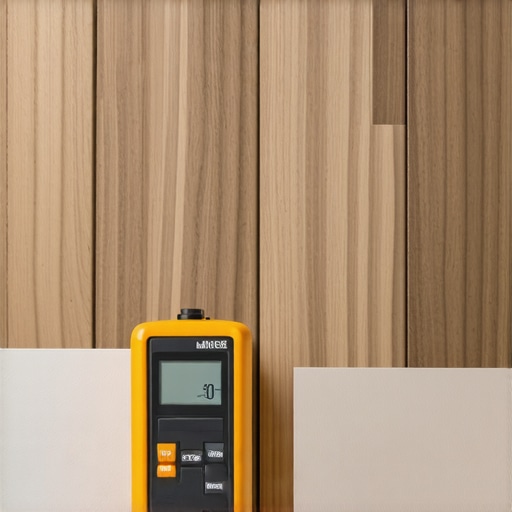
Before any luxury vinyl plank installation begins, you must know the Moisture Vapor Emission Rate (MVER) of your slab. If you don’t use a moisture meter, you are essentially flying blind. I always tell my clients to read How to Use a Moisture Meter Before Installing Wood Floors to understand the mechanics of this process. Even if you aren’t installing traditional wood, the principles of moisture detection remain the same.
In North Texas, hydrostatic pressure can push moisture through microscopic cracks in your foundation. If you trap that moisture under a “waterproof” floor without testing and addressing it, that moisture has nowhere to go. It sits against the bottom of your planks, leading to adhesive failure, pH spikes that can eat away at the floor’s backing, and eventually, mold growth. Skipping this step on Texas concrete is the number one cause of flooring failure in our region.
Why “Waterproof” Doesn’t Mean “Vapor-Proof”
There is a massive marketing misunderstanding in the flooring industry. When you buy pisos lvp, the “waterproof” label refers to top-down moisture. If your dishwasher leaks or your dog knocks over a water bowl, the liquid won’t penetrate the wear layer or cause the core to swell. However, “waterproof” does not mean “vapor-proof.”
Moisture vapor rising from the subfloor is a different beast entirely. When vapor gets trapped between the concrete and the underside of the plank, it creates a greenhouse effect. This can cause “cupping” (where the edges of the plank rise higher than the center) or “peaking” (where two planks push against each other and lift at the joint). To prevent this, most manufacturers require a 6-mil poly film vapor barrier for floating floors over concrete. Even if your LVP has a pre-attached pad, that pad is rarely a substitute for a true moisture vapor barrier in the humid McKinney environment.
Subfloor Preparation: The Foundation of Success
While moisture testing is the most skipped step, failing to properly level the subfloor is a close second. If you are looking for affordable laminate flooring installation, you might be tempted to cut corners on prep to save on labor costs. This is a mistake that will haunt your ears and your wallet.
LVP and laminate floors require a subfloor that is flat within 1/8 inch over a 10-foot radius. I always use a 10-foot straightedge to identify high spots that need grinding and low spots that need filling. If you skip this, your floor will have “deflection” – it will flex when you walk on it. Over time, this constant movement breaks the locking mechanisms of the planks, leading to gaps and “hollow” sounds. I recommend reading Mastering Floor Leveling: Pro Secrets for Perfect Installations and How to Check for High Spots with a 10-Foot Straightedge to see how the pros ensure a rock-solid foundation. If your subfloor is uneven, you must learn The Secret to Mixing Leveler for a Glass-Smooth Finish to avoid a lumpy, unstable surface.
Room-Specific Strategies: Kitchens & Bathrooms
When it comes to bathroom remodeling McKinney homeowners often ask if LVP is better than tile. While LVP is warmer underfoot, bathrooms require even more stringent waterproofing. A common error I see is the “Wax Ring Mistake.” When installing new flooring in a bathroom, people often fail to raise the toilet flange to match the new floor height, leading to leaks that rot the subfloor silently under the new “waterproof” planks.
For the best flooring for kitchen floors, LVP is a top contender, but laminate tile flooring has made huge strides in water resistance. Regardless of the choice, the perimeter of the room must be sealed with 100% silicone caulk in the expansion gap before the baseboards are installed. This prevents water from spills or mopping from seeping under the floor at the edges – a detail often overlooked by DIYers.
Beyond Vinyl: Hardwood and Carpet Considerations
Not every room in a McKinney home is suited for vinyl. Many homeowners still prefer the timeless look of engineered hardwood flooring installation. Unlike solid hardwood, engineered wood is more stable in our humidity, but it still requires a 48-to-72-hour acclimation period inside the home. If you skip acclimation, the wood will expand or contract after installation, leading to structural failure. If you already have old wood floors that look tired, you might not need to replace them; you can often restore floorboards to their former glory with professional sanding and refinishing.
For bedrooms, comfort is king. We often direct clients to a carpet flooring warehouse to explore nylon carpet flooring. Nylon is exceptionally resilient and stain-resistant, making it perfect for McKinney families with kids and pets. Even with carpet, the subfloor must be clean and dry to prevent the growth of allergens and odors in the padding.
Common DIY Pitfalls to Avoid
Even if you do the moisture testing, other small errors can ruin the job. One of the biggest is failing to leave an expansion gap. Floors expand and contract with the seasons. If you install the planks tight against the wall, the floor will “tent” or buckle when the humidity rises. This is why you might see Why Your Luxury Vinyl Planks are Separating in the Sun; heat and humidity are powerful forces.
Another pitfall is using the wrong underlayment. Some people think thicker is better, but a squishy underlayment will cause the joints of your LVP to snap. This is why I always explain Why Cheap Underlayment Makes Your Luxury Vinyl Sound Hollow. The underlayment must be high-density to support the locking system of the planks while providing the necessary sound dampening and moisture protection.
Conclusion: Do It Right the First Time
Waterproof flooring is a fantastic investment for any McKinney home, but “waterproof” is only as good as the installation. Don’t skip the moisture test. Don’t skip the leveling. And don’t skip the vapor barrier. By focusing on these invisible technical requirements, you ensure your floor remains beautiful and healthy for decades.
If you’re ready to upgrade your home, contact me at cmaflooring.com. Whether you need a fast quote or expert guidance on your next waterproof flooring installation, I am here to ensure your project is a success from the subfloor up.