Ever spent hours laying down tiles only to find out you missed that one crucial step, leaving your beautiful new floor uneven and prone to cracks? I’ve been there. The frustration of a wobbly, uneven surface is real—and it can turn what should be a rewarding project into a nightmare. But here’s the truth: most issues with tile and floor installation come down to one thing—poor floor leveling. When I first started out, I underestimated just how vital a perfectly leveled surface is. I thought a bit of shimming here and there would do the trick. Spoiler alert: it didn’t. My early mistakes taught me a hard lesson that I want to share with you today.
Why Proper Floor Leveling Is the Backbone of Lasting Tile Installations
Imagine investing in high-quality tiles, only to have them crack or loosen after a few months. It’s heartbreaking and costly. A level surface isn’t just about aesthetics; it’s about durability and safety. When your subfloor isn’t properly leveled, it causes stress on your tiles, leading to cracks, uneven surfaces, and even premature failure. According to industry experts, neglecting proper leveling can cut the lifespan of your flooring in half. That’s a risk I’m not willing to take, and I bet you aren’t either. This is where mastering the art of floor leveling makes all the difference. If you’re wondering whether your project is doomed from the start, I urge you to check out this comprehensive guide for detailed techniques and tips.
Is It Really Worth the Extra Effort and Cost?
Now, I know what some of you might be thinking—”Isn’t leveling a hassle? Can’t I just get away with it?” Honestly, I used to think the same. I thought a quick shim here and there would suffice. But early on, I skipped a proper leveling step, and it showed. Cracks appeared, tiles shifted, and I had to redo the entire job. That mistake cost me time, money, and frustration. I learned the hard way that investing in quality leveling materials and techniques saves you headaches down the line. Plus, it’s worth noting that professional-grade leveling saves you from costly repairs later on. If you want to avoid my rookie mistakes, I recommend reading this article on common pitfalls to avoid.
So, before you start laying those tiles, ask yourself—have I properly prepared my subfloor? If not, don’t worry. I’ll walk you through the essential steps to achieve a flawless, durable finish. Let’s get started on making your floor the envy of every guest!
Prepare Your Subfloor with Precision
Before you start laying tiles, ensure your subfloor is thoroughly cleaned and free of debris, dust, and grease. Use a vacuum and damp cloth to clean the surface. Think of your subfloor as a blank canvas—if it’s dirty or uneven, your masterpiece (the tile) will suffer. Once clean, inspect for any cracks or loose sections and fix them with a suitable patching compound. This initial step is like setting a solid foundation for a house—crucial for lasting results.
Identify High and Low Spots Effectively
Use a long, straightedge or a level to check for uneven areas. Place the tool across different sections of the floor, looking for gaps or wobbling. For larger areas, a laser level can save time and improve accuracy. When I tackled my first large kitchen project, I used a 6-foot straightedge and found several dips and humps. Mark these spots with chalk or painter’s tape to visualize the problem areas. This step is akin to a doctor diagnosing symptoms before treatment—precision here prevents future issues.
Apply Self-Leveling Compound Correctly
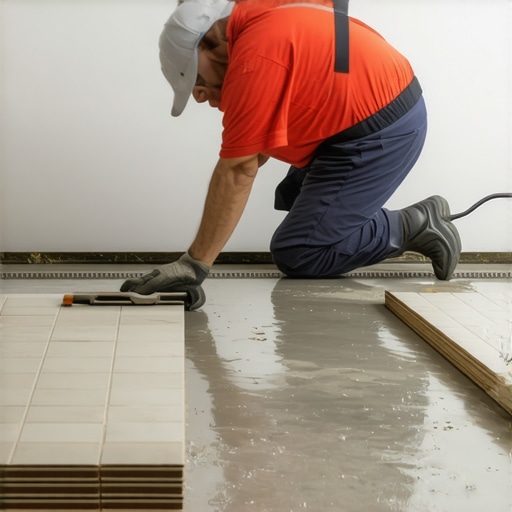
Mix the self-leveling compound according to manufacturer instructions. Pour it onto the low spots, and spread it with a trowel or gauge rake. The goal is to fill dips and smooth out humps to create a flat surface. I remember pouring the compound into my hallway and watching it flow into the cracks, leveling itself like a mini magic trick. Use a long straightedge to feather the compound across the floor, ensuring a uniform, level surface. This technique is similar to pouring concrete—work quickly and smoothly to avoid seams or bubbles. For detailed technical guidance, check out this guide.
Pay Attention to Drying Times
Allow the compound to cure fully before proceeding. Rushing this step can cause cracks or shifting later. Follow the manufacturer’s recommended drying time—usually 24 to 48 hours. During my project, I kept the area free of foot traffic, and I used a fan to speed up drying. Think of it like baking a cake—the patience ensures a perfect rise and structure. Once dry, recheck with your level to confirm the surface is truly flat.
Re-Check and Fine-Tune
After the leveling compound has set, re-inspect the floor with your straightedge or level. Mark any remaining dips and apply additional compound if necessary. A meticulous check guarantees the surface is ready for tiling. I found that a second application in a few stubborn spots saved me from future tile cracks—small extra effort for big payoff. This step is like fine-tuning a musical instrument—precision makes all the difference for harmony and longevity.
Proceed with Confidence
Once your floor is perfectly level, you’re ready to lay tiles with confidence. Proper preparation minimizes the risk of cracks, uneven surfaces, and premature failure. For more detailed steps on tile installation, visit this comprehensive guide. Remember, a flawless floor starts with a level foundation—invest the effort now, and enjoy durable, beautiful results for years to come.
Most DIY enthusiasts and even seasoned pros often fall into the trap of oversimplifying floor leveling. Everyone says that a quick skim of leveling compound or a few shims will do the trick, but let’s dig deeper into what many overlook— nuances that can make or break your tile installation.
One widespread myth is that the surface only needs to be “mostly flat”. In reality, subtle dips of just a millimeter can cause significant issues over time, leading to cracks or tiles loosening prematurely. Advanced experts emphasize the importance of achieving a near-perfect plane—less than 1/8 inch deviation over a 10-foot span—to ensure durability. This might sound excessive, but studies show that even minor imperfections can double the risk of tile failure within five years (see this detailed guide).
Another misconception is that self-leveling compounds are foolproof. While they are powerful tools, improper mixing, pouring, or curing can lead to unintentional voids or bubbles, which compromise the surface’s flatness. A common mistake is rushing the drying process; curing too quickly or unevenly can induce cracks or shifts. Experts recommend meticulously following manufacturer instructions and double-checking the surface with a long straightedge after curing. For advanced tips on this, see this resource.
Now, here’s a question for the experienced: How does substrate stability influence the success of your leveling efforts? The truth is, even if your surface appears flat initially, underlying issues like moisture, temperature fluctuations, or loose sublayers can cause future movement—undermining your work. To mitigate this, I always recommend testing the subfloor’s stability and moisture content before applying leveling compounds. For an in-depth look, visit this expert guide.
And let’s not forget about edge treatments. Many skip proper edging or fail to feather the compound correctly, resulting in uneven transitions or visible seams. Mastering these nuances requires patience and a keen eye—something that separates a good job from a professional finish. Remember, the devil is in the details, and paying attention here can save you hours of troubleshooting later. For more insights, check out this comprehensive guide.
In my experience, understanding these hidden nuances and avoiding common myths can dramatically improve your results and extend the lifespan of your flooring. Have you ever fallen into this trap? Let me know in the comments and share your stories!
Invest in Quality Tools for Precision and Durability
When it comes to maintaining your flooring projects, having the right tools is a game-changer. I personally swear by a high-quality laser level for initial assessments and ongoing checks. Unlike traditional spirit levels, laser levels provide a 360-degree view of your surface’s flatness, making it easier to spot subtle dips or humps that could compromise your tile or hardwood longevity. I recommend the Leica Geosystems laser level because of its accuracy and durability, which pays off over multiple projects. For smoothing and fine-tuning, a rubber float or a long, straightedge is invaluable—these tools help feather leveling compounds seamlessly, preventing future cracks or uneven surfaces. A sturdy trowel with a comfortable grip also makes a difference when applying compounds or adhesive evenly.
Establish a Routine for Regular Inspection and Upkeep
Long-term success hinges on consistent maintenance. I recommend inspecting your floors at least twice a year, especially in high-traffic areas. Look for signs of shifting, cracks, or loose tiles or planks. Using a moisture meter periodically helps detect underlying issues that can cause future problems, particularly with hardwood floors. For example, if moisture levels are high beneath the surface, it’s crucial to address the root cause before resealing or refinishing. Remember, proactive maintenance extends the life of your investment. For detailed guidance on hardwood care, check out this comprehensive article.
Address Wear and Damage Promptly
Don’t wait until damage becomes obvious—regularly clean and seal your floors to prevent dirt buildup and moisture infiltration. Minor scratches or dents can often be repaired with spot refinishing, which I find more cost-effective than full replacements. For hardwood, using a touch-up kit with matching stain and finish helps restore the surface without noticeable differences. For tiles, replacing or re-grouting affected areas maintains integrity and appearance. Staying ahead of wear ensures your floors remain stunning and functional for decades. In the future, I predict advancements in smart flooring sensors will allow homeowners to monitor floor health remotely, alerting them to issues before damage occurs.
How do I maintain my floors over time?
The key is consistency. Regular cleaning with manufacturer-approved products, prompt repairs, and periodic re-sealing or refinishing keep your floors in top shape. Don’t forget to inspect sublayers or underlayment if accessible, as issues there can undermine your surface. Scheduling professional check-ups every few years can also catch problems early, saving money and effort down the line. Want to get ahead of potential issues? Try implementing a quarterly inspection routine using a simple moisture meter and a straightedge, and see how much longer your floors last without costly repairs. For more advanced maintenance tips, visit this expert guide.
The Hardest Lesson I Learned About Floor Leveling
- Skimping on the initial prep work taught me that even tiny dips can cause major cracks over time. Now I know that a truly flat surface is non-negotiable.
- My biggest mistake was assuming self-leveling compounds are foolproof. Proper mixing and patience during curing are key to avoiding voids and bubbles that compromise durability.
- Ignoring substrate stability can sabotage your efforts. Testing moisture and movement before applying leveling compounds saved me from costly repairs later.
- Edge feathering might seem trivial, but small details here prevent visible seams and uneven transitions—professional finishing is all about the details.
- Investing in quality tools like laser levels and straightedges has transformed my workflow, making precise leveling much easier and more reliable.
My Essential Toolkit for Floor Leveling
- Laser Level: I trust the Leica Geosystems laser level for its accuracy and ease of use, helping me spot dips and humps effortlessly.
- Long Straightedge: A sturdy straightedge is indispensable for feathering compounds and confirming flatness after curing.
- Moisture Meter: Regularly checking moisture levels ensures substrate stability, especially in hardwood projects.
- High-Quality Patching Compounds: Using the right compounds for cracks and dips results in a smoother, more durable surface.
Keep Your Floors Flawless and Your Mind at Ease
Getting your floor perfectly level might seem daunting at first, but it’s an investment in your project’s longevity. With patience, the right tools, and attention to detail, you can achieve a finish that’s not only beautiful but built to last. Remember, every successful flooring project starts with a level foundation—so don’t rush this critical step. If you’re ready to take your skills to the next level, explore this guide for expert tips and techniques. Your floors—and your future self—will thank you!
Reading through this post really resonated with my own experience in DIY flooring projects. One thing I’ve learned is that investing time in proper subfloor preparation upfront pays off tremendously in the long run. I once rushed through leveling and ended up with cracked tiles after just a few months. Now, I always double-check the surface with a laser level and spend extra time filling in dips, even minor ones. It’s fascinating how such small imperfections can lead to big problems later. What techniques do others prefer for ensuring substrate stability before applying leveling compounds? I’ve found moisture testing and firming up loose sections invaluable, especially in older homes where the subfloor may be compromised. Sharing these tips has made me realize how crucial patience and attention to detail are to achieving flawless results. Would love to hear about other tools or tricks people have used to make this process smoother and more reliable.
This article really hits home for me, especially the part about the importance of substrate stability. I’ve learned from my own projects that skipping this step can cause headaches later on, like cracked tiles or uneven surfaces. I recently tested moisture levels with a digital hygrometer before starting my hardwood flooring and was surprised to find high moisture in the subfloor, despite the surface looking dry. Addressing that issue early on saved me from future problems. I also started using a more precise straightedge for better accuracy in identifying dips—tools really do make a difference. Has anyone experimented with different moisture barriers or vapor retarders to improve substrate stability? I’d be interested in hearing what others have found effective, especially in humid climates where moisture content can fluctuate unexpectedly.