
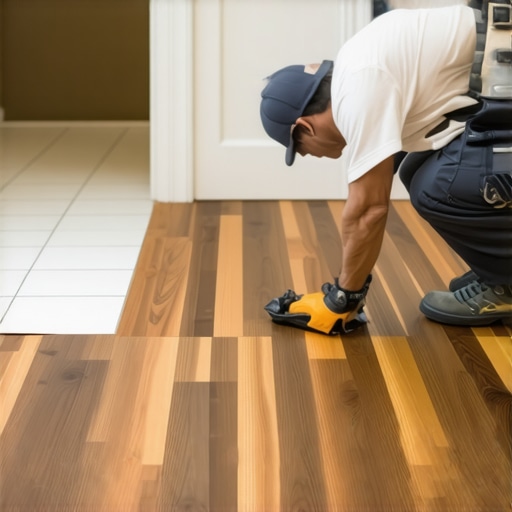
It was a sun-drenched Saturday when I finally decided to upgrade my old, creaky floors. Expecting a quick fix, I dove into the project, only to realize that my enthusiasm was met with uneven surfaces and stubborn tiles that refused to sit right. That lightbulb moment hit me hard: the secret to lasting beauty isn’t just about choosing the right materials—it’s about mastering the installation process from start to finish.
Why Proper Flooring Installation Can Make or Break Your Space
Have you ever paid top dollar for beautiful hardwood or tile and then been disappointed with the outcome? Trust me, I’ve been there. I learned early on that a poorly executed installation can turn expensive floors into ongoing headaches—warping, uneven surfaces, cracked tiles, and a finish that fades faster than you’d hope.
From personal experience, rushing the job or skipping vital prep steps is a costly mistake. For instance, I once ignored floor leveling and paid the price with uneven tiles that cracked underfoot. Now, I ensure every project begins with proper assessment and preparation, which makes all the difference. As experts emphasize, effective floor preparation is the foundation for durability and aesthetics (learn more about floor leveling techniques).
Imagine spending hundreds of hours and dollars, only to see your dream floors develop cracks or squeaks within months. That’s why I’m committed to sharing the insider tips that will help you avoid these pitfalls.
Before we dive into the specific steps, I want to ask: Have you ever encountered uneven floors or tiles that wouldn’t sit right? If so, you’re not alone, and the good news is, with a little knowledge and preparation, you can achieve that flawless, durable finish you’re aiming for.
So, let’s get started on transforming your space with installation techniques that stand the test of time. Next, we’ll walk through how to properly assess your subfloor and prepare it for a perfect installation.
Assess Your Subfloor With Precision
Begin by thoroughly examining your subfloor; any bumps or dips will transfer to the finished surface, causing unevenness or cracking. Use a long, straightedge or a laser level to identify high and low spots. When I tackled my last hardwood project, I set up a laser level across the entire space, marking areas that needed attention. This step ensures you understand how much work is required to create a stable base. For detailed strategies, check expert floor leveling techniques.
Prepare and Level the Surface Efficiently
Remove All Debris and Loose Materials
Clear the subfloor of dust, old adhesives, or debris that could interfere with leveling compounds or adhesives. I once ignored this and noticed my tiles started to loosen after a few months. Cleaning the surface may seem simple but makes a profound difference in adhesion quality.
Address Major Irregularities First
Use a self-leveling compound to fill dips or smooth out bumps. Mix according to manufacturer instructions, and pour it across the floor, using a trowel or roller to spread evenly. My first attempt was messy—I poured too much in one spot, which created a high ridge. After that, I learned to work in sections, pouring small amounts and guiding the compound smoothly. For best practices, consult ultimate-floor leveling tips.
Ensure Proper Curing and Surface Preparation
Allow leveling compounds to cure fully before proceeding. Rushing this step can cause cracks or shifts, spoiling your finish. During mine, I scheduled the project over two days explicitly to let the compound set, resulting in a perfectly flat surface. Once cured, lightly sand high spots and clean the surface once more to remove dust. This step guarantees a smooth, even substrate for tile or hardwood installation. For detailed layer-by-layer guidance, see precise-leveling techniques.
Lay the Flooring with Confidence
Follow manufacturer instructions for adhesive application and layout your tiles or planks beforehand to minimize cuts and waste. During my last project, I snapped chalk lines to ensure a straight layout, which saved me from uneven joints. Use spacers for tiles to maintain consistent grout lines, and press materials firmly into the adhesive. For expert tips, explore tile installation pointers. Remember, meticulous attention in this phase prevents costly corrections later and guarantees a long-lasting, beautiful finish.Many homeowners and even DIY enthusiasts believe that leveling floors is as simple as pouring a self-leveling compound or following basic instructions. However, this oversimplification often leads to costly mistakes and misunderstandings about what truly contributes to a durable, flawless finish. Let’s dig deeper into what most people get wrong about floor leveling and installation. One widespread myth is that perfect floors are achievable solely through the choice of high-quality materials; in reality, meticulous preparation and understanding subtle nuances play a crucial role in longevity and appearance. Rushing through substrate assessment or neglecting proper curing can cause cracks, unevenness, or tiles popping loose later on. For instance, I once skipped thorough subfloor evaluation, which resulted in uneven tiles that cracked under pressure. This mistake highlighted that detailed surface assessment isn’t just an extra step but the foundation of a lasting installation.
A common trap is believing that all leveling compounds are created equal. In fact, different formulations have specific uses, setting times, and compatibility considerations. Choosing the wrong product for your particular subfloor type or climate can undermine the entire project. For advanced installers, understanding the nuances of substrate porosity and how it interacts with adhesives or leveling agents is vital. According to industry experts, improper substrate preparation, such as not using a primer or failing to clean dust thoroughly, can significantly reduce adhesion quality, leading to premature failures. For a detailed guide on the best practices, refer to precise floor leveling techniques.
The hidden nuance often overlooked involves the importance of edge temperature and room conditions during curing. Many don’t realize that environmental factors like humidity and temperature swings can impact the curing process of leveling compounds and adhesives, causing shifts or cracks even after proper installation. For example, during my last project, I neglected to control indoor humidity, resulting in uneven curing and slight elevations at edges. This small oversight reminded me that mastering these subtle factors is the difference between an average job and a professional-grade finish.
What about tile and hardwood floors? A common mistake is assuming that they can be installed over any uneven surface without additional preparation. However, irregularities as slight as 1/8 inch can lead to grout lines that skew or planks that creak and warp. Advanced practitioners understand that tailored solutions, such as custom underlayment or subfloor reinforcement, are necessary for certain situations. Experts emphasize that aligning installation methods with the specific substrate conditions is paramount; for example, applying a primer and using the correct adhesive types can prevent long-term issues. To learn more about such techniques, visit expert flooring techniques.
So, have you ever fallen into this trap of thinking floor leveling is just about pouring compound and calling it a day? Share your experiences or questions below, and let’s ensure your next project achieves the quality it deserves.Ensuring your newly installed floors remain beautiful and durable over time requires investing in the right tools and adopting effective maintenance routines. From professional-grade equipment to simple care practices, I’ll share what I personally use and recommend to keep your floors in top condition.
Invest in Precision Leveling Tools for Consistent Results
High-quality laser levels have revolutionized my approach to floor leveling, providing unparalleled accuracy in assessing surface flatness. I rely on a laser level that projects a bright, continuous line across the room, making it easy to identify uneven spots—especially when working in large spaces or low-light conditions. This tool ensures that I achieve a perfect, durable base, reducing the risk of cracks or loose tiles down the line. For anyone aiming for flawless results, I recommend deploying a professional-grade laser level, as it minimizes guesswork and saves time in the long run. To learn more about the importance of precise leveling, visit expert-flooring-techniques.
Use Quality Adhesives and Application Equipment
Skimping on adhesives can lead to long-term problems like shifting or cracking. I prefer using premium, polymer-enhanced adhesives that provide superior bonding strength and flexibility. To apply these effectively, I use notched trowels with the correct blade size—often 1/4″x3/8″—which I select based on the type of flooring and substrate. An even, consistent application ensures proper adhesion, preventing future issues. Investing in good notched trowels equipped with comfortable handles and durable blades makes my work much smoother. For the best results, I follow application guidelines outlined in ultimate guide to floor leveling.
The Hidden Truths That Changed My Flooring Game
One of the most valuable lessons I learned from years of installing floors is that success hinges on attention to subtle details many overlook. I once believed that choosing premium materials was enough, but I discovered that meticulous preparation and understanding environmental nuances truly make a difference. Achieving a perfect, durable finish requires embracing the complexity behind the scenes—not just the visible surface.
Curated Tools and Resources That Elevate Your Skills
My go-to toolkit includes a high-precision laser level that offers unmatched accuracy, ensuring flatness and straight lines throughout the project. I also trust premium polymer-enhanced adhesives with the right notched trowels, which deliver consistent bonding and help prevent future cracks or shifts. For comprehensive guidance, I often refer to resources like expert floor leveling techniques and the ultimate guide to floor leveling. These materials have transformed how I approach each project, making flawless results more attainable.
Embracing the Challenge and Making It Yours
Every floor is a new puzzle, and I’ve found that the journey of perfecting your skills is as rewarding as the final result. Don’t shy away from the intricacies—mastering the prep work, environmental factors, and precise application positions you steps ahead. Remember, the satisfaction of stepping onto a beautifully leveled, perfectly installed floor is worth every moment of effort. Ready to elevate your flooring projects? Share your experiences or questions below, and let’s turn your next project into a masterpiece.
Comments are closed.