It was a Saturday morning when I stepped into a client’s home and immediately noticed the unevenness of the freshly laid tile. The grout lines were jagged, and the tiles looked more like a warped mosaic than a sleek surface. My stomach sank. Despite my best efforts, I had overlooked one crucial step—floor leveling. That lightbulb moment made me realize how vital proper techniques are for durable, long-lasting floors.
Why Small Details Make or Break Your Flooring Project
When I first started out, I believed that choosing quality materials was enough. Turns out, that’s just half the battle. The real secret lies in the preparation—particularly, ensuring the subfloor is perfectly level. An uneven surface can cause tiles to crack or wooden planks to warp over time. That’s why mastering expert leveling techniques isn’t just recommended; it’s essential. Accurate leveling guarantees your flooring will hold up against daily wear and tear, ultimately saving you time, money, and frustration.
Is Skipping Floor Leveling Actually Worth the Hype?
In my early days, I dismissed floor leveling as an unnecessary step—until I faced the consequences of my shortcut. One project, in particular, taught me a hard lesson. A client’s new hardwood floors developed squeaks and gaps within months. I’d skipped meticulous leveling, assuming a quick fix wouldn’t matter. The truth? Proper leveling isn’t optional. It’s the foundation for durability. For a detailed overview of how to get it right, check out this comprehensive guide. It helped me transform my approach and deliver flawless results.
Have you ever skipped a crucial step in flooring installation? Share your stories—I’d love to hear how it turned out. Moving forward, I’ll walk you through the proven techniques that will elevate your flooring project from haphazard to professional quality, ensuring each plank and tile stays perfect for years to come.
Assess the Surface Before You Start
Begin with a thorough inspection of your subfloor—look for cracks, dips, or high spots. Use a long straightedge or a level to identify uneven areas. For example, I once laid tiles over a subfloor with a hidden 1/4-inch dip along one edge; the tiles cracked under minimal pressure. Address these issues first to prevent future problems.
Prepare Your Tools and Materials
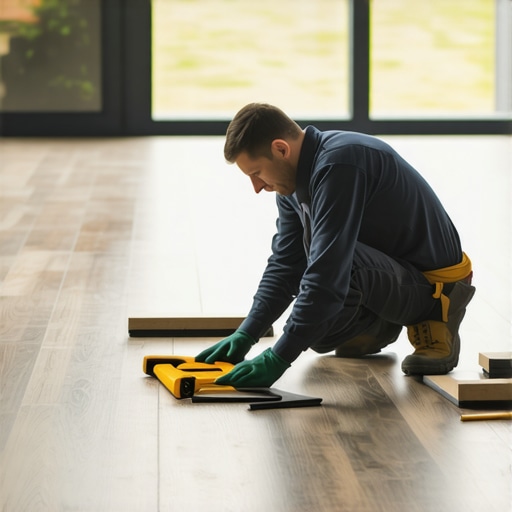
Gather a self-leveling compound, trowel, mixing bucket, and a primer suitable for your subfloor type. Read the product instructions carefully, as mixing ratios and curing times are crucial for proper results. Using the right tools ensures a more efficient and precise leveling process.
Apply Primer for Better Adhesion
Before pouring the leveling compound, apply a primer recommended by your manufacturer. This step improves the bonding strength of the compound to the subfloor, reducing the risk of future cracking or detachment. I learned this the hard way—skipping primer led to uneven curing and a rough surface that made tile installation more difficult.
Mix and Pour the Leveling Compound
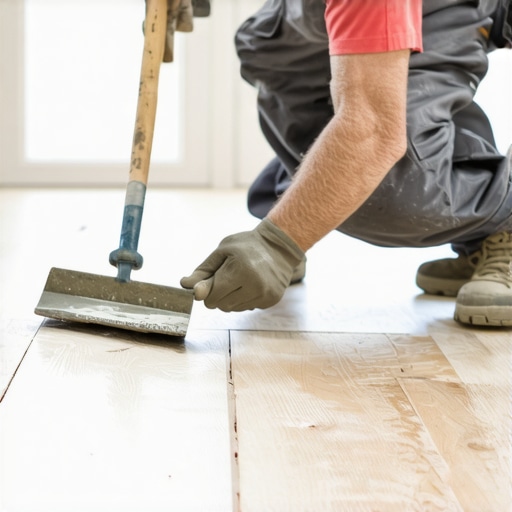
Mix the compound thoroughly, following the manufacturer’s instructions to achieve a smooth, lump-free consistency. Pour it in small sections, starting from the low spots, and use a trowel or a squeegee to spread it evenly. Think of it as smoothing out a pancake batter—careful spreading ensures a flat, uniform surface.
Prioritize Micro-Level Adjustments
Focus on small, precise adjustments to fill in dips and high spots. Use a gauge rake or notched trowel to feather out the compound gently. When I did this on a recent project, I noticed how minor feathering eliminated the need for additional sanding or patching afterward, saving me time.
Allow Proper Curing Time
Let the compound cure undisturbed—most products require at least 24 hours. Avoid walking over or disturbing the surface during this time. Patience now prevents structural issues later; rushing can cause cracks or uneven settling, which are difficult to correct post-installation.
Check the Surface Again and Make Adjustments
After curing, re-examine the surface with a level or straightedge. For stubborn dips, you might need to reapply small amounts of compound. My recent experience involved spot-topping a few areas, which resulted in a perfectly flat surface ready for tile or flooring. If needed, refer to these precise techniques for advanced leveling strategies.
Final Surface Preparation for Flooring Installation
Once the surface is level and cured, clean off any dust or debris thoroughly. A clean, flat surface ensures better adhesion of your chosen flooring material, whether it’s hardwood, tile, or laminate. Remember, proper prep is the foundation for a durable, professional-looking finish.
 Many DIY enthusiasts and even some professionals often believe that proper materials and following basic instructions are sufficient for flawless flooring. However, this overlooks the critical nuances that truly determine a long-lasting, professional-quality finish. One such overlooked aspect is understanding the complex behavior of subfloor materials and how they interact with the applied leveling compounds and final flooring layers.
A common myth is that once you apply a self-leveling compound, your subfloor becomes perfectly flat and ready for any flooring type. In reality, the different subfloor materials—whether concrete, wood, or combination—each have unique moisture levels, expansion rates, and structural behaviors. For example, concrete subfloors might have moisture content that can cause leveling compounds to cure improperly, leading to future cracks or unevenness. Experts recommend testing moisture levels beforehand and using compatible primers to mitigate this issue. According to industry research, improper moisture management is among the top causes of flooring failure within the first few years of installation, emphasizing the importance of mastering these detailed steps.
Another advanced mistake many make is neglecting the differential movement of materials over time. Wood expands and contracts with humidity swings, whereas tile and concrete are relatively stable. Failing to accommodate these differences can result in cracks, delamination, or buckling in the flooring layers. An effective solution involves using expansion joints and flexible adhesives or sealants, which allow for natural movement without compromising structural integrity. For detailed techniques on managing these issues, check out this comprehensive guide that dives deep into such nuances.
Now, let’s address a sophisticated question: How can a craftsman anticipate and prevent subtle but damaging imperfections in the leveling process before they become visible? The key lies in meticulous surface testing. Beyond simple visual inspections, using precision tools like laser levels or dial gauges to measure small deviations can reveal hidden dips or high spots that standard tools miss. Regularly rechecking the surface during and after applying leveling compounds ensures consistency. Moreover, understanding the curing behavior—affected by temperature and humidity—is pivotal. A study by flooring experts indicates that curing inconsistencies can lead to micro-movements in the substrate, ultimately causing cracks or unevenness in the final floor.
Mastering these advanced nuances transforms a good installer into a true craftsman. It’s about understanding not just the how, but the why behind each step—anticipating potential pitfalls and proactively addressing them. Implementing these expert strategies ensures your flooring will not only look great initially but will stand the test of time, resisting the common pitfalls that catch many beginners off guard.
Have you ever fallen into this trap? Let me know in the comments! To elevate your flooring projects further, explore detailed techniques on precise leveling strategies or learn about common installation pitfalls to avoid at these expert tips. Your journey toward flawless, durable flooring starts with mastering these hidden details.Maintaining your flooring’s integrity over time requires the right tools and proactive care. One of my all-time favorite investments is a **laser level**. Unlike traditional bubble levels, laser levels project a consistent, precise line across a room, making it easier to spot uneven surfaces or check for levelness after installation. Personally, I rely on the **Bosch Cross-Line Laser Level**—its durability and accuracy have saved me countless hours of troubleshooting and re-leveling. For larger projects, a **digital moisture meter** is crucial, especially when working with wood or concrete subfloors. It helps monitor moisture content, preventing issues like warping or mold growth, which can jeopardize years of durability. I’ve found the **Protimeter Surveymaster** invaluable for pre-installation assessments, ensuring optimal adhesive adhesion and long-term performance.
Beyond tools, consistent maintenance is key to preserving those pristine surfaces. For hardwood floors, regular cleaning with a **microfiber mop** and using a **specialized wood floor cleaner** keeps scratches and stains at bay. I recommend avoiding excessive water—mopping should be damp, not soaked—to prevent swelling. For tiles, sealing grout lines annually is essential, and I use a **hydrophobic grout sealer** to repel dirt and moisture. This simple step dramatically reduces staining and bacterial buildup.
Looking ahead, the trend is moving toward **smart floor sensors** embedded beneath the surface. These sensors can detect moisture, temperature fluctuations, and even signs of structural shifts, alerting homeowners before small issues escalate into costly repairs. Advances in **IoT technology** promise to make ongoing maintenance more automated and efficient, enabling proactive care rather than reactive fixes.
### How do I keep my floors performing well over time?
Start with regular inspections using your laser level or moisture meter. Address uneven spots promptly—reapplying a small amount of leveling compound is surprisingly effective if caught early. Equally important is maintaining a clean surface—use gentle cleaning products tailored to your flooring type and install protective pads on furniture legs to prevent scratches. Consistent sealing of grout and periodic refinishing of hardwoods extend the life of your floors, keeping them attractive and durable for decades.
For those interested in innovative maintenance solutions, I suggest exploring **smart sensors** that monitor your flooring conditions—this is where the industry is heading, promising more longevity and less guesswork. Reports from industry experts advocate for integrating such technology into routine care routines, ensuring your investment endures. To get started, consider trying out a moisture meter or investing in a laser level for ongoing quality checks. Small, regular upkeep using precise tools pays off in the long run, giving your floors that flawless look and structural strength years down the line.
Through my years in the flooring industry, I’ve realized that the most impressive outcomes often hinge on the quiet victories—the small, overlooked details that distinguish a good job from an exceptional one. One of those is understanding that every surface tells a story, and preparing that story with precision can save countless headaches later. The biggest lesson I learned? Never underestimate the power of meticulous surface assessment and proactive adjustments—these are the true game changers in flooring installation.
Lessons I Didn’t Expect to Learn the Hard Way
- Even the tiniest dip can cause a domino effect of problems. I once thought a slight imperfection was negligible, only to see it blossom into cracks or warped tiles months down the line. Now, I always recheck and re-level multiple times, trusting that tiny gaps are signs of future trouble.
- The importance of compatible materials is more than just a suggestion. Using moisture-resistant primers and understanding substrate behavior has drastically increased the longevity of my projects. It’s like giving your work a sturdy framework to stand the test of time.
- Patience during curing phases can’t be rushed. Rushing the process often leads to micro-movements and imperfections. I’ve found that investing a little extra time in curing saves me hours of repairs later, making my results more dependable.
- Tools are your best allies in quality assurance. Laser levels and moisture meters aren’t just fancy gadgets—they’re critical in preempting flaws before they occur. Trust me, they’ve become staples in my toolkit for a reason.
- Continuing education unlocks new levels of craftsmanship. Regularly referring to guides like this comprehensive guide has opened my eyes to nuances I previously overlooked, elevating my work from good to extraordinary.
Tools and Resources That Changed My Approach
- Bosch Cross-Line Laser Level: Accurate alignment saves time and prevents errors from the start. Its ease of use and reliability make it a non-negotiable in my projects.
- Protimeter Surveymaster: Moisture management is crucial. Knowing the precise moisture content of my subfloor helps me choose the right primers and compounds, preventing future failures.
- Hardwood floor care products: Regular cleaning and maintenance prolong beauty and durability. I swear by specific soft cleaners and protective pads—simple yet effective.
- Smart moisture sensors: The future of proactive flooring maintenance. Monitoring conditions beneath the surface keeps problems at bay before they manifest visibly.
Step Into Your Next Level of Flooring Confidence
Remember, every step in flooring installation carries weight, especially when it comes to levelness and preparation. Embrace continuous learning, equip yourself with the right tools, and pay close attention to detail—these are the keys to creating lasting, beautiful floors. Don’t shy away from taking on challenging projects; each one offers an opportunity to refine your skills and build confidence. Ready to transform your approach and leave lasting impressions? Your journey to flawless floors starts now.
What’s been your biggest revelation during a flooring project? Share your experience below—I’d love to hear your story!
Reading through this detailed guide really resonated with my own experiences in flooring. I can’t stress enough how many problems I’ve encountered due to overlooking the importance of surface prep and moisture testing. My most recent project involved a concrete slab with high moisture that caused tiles to crack within a year—something I realized only after the damage was done. Since then, I’ve started using a digital moisture meter and always test before proceeding. It’s fascinating how small details like proper priming and micro-level adjustments can make such a big difference in the long run.
One challenge I often face is managing the expansion movement of different materials, especially in areas with fluctuating humidity. I’ve recently started incorporating expansion joints and flexible sealants, which has greatly improved the durability of my installations. Has anyone tried advanced sensor technology to monitor subfloor conditions continuously? I’d love to hear if those methods are worth the investment for a DIY enthusiast or small contractor.
This was such a comprehensive breakdown of the critical steps often overlooked in flooring installation. I’ve been in the trade for a few years now, and I can’t emphasize enough how much proper surface prep impacts the final result. One area I’ve found particularly tricky is managing moisture in concrete slabs, especially in humid climates. Testing moisture levels beforehand always prevents issues like adhesion failure down the line. Has anyone experimented with newer moisture barrier products or vapor mitigation systems? I’ve heard they’re game-changers for problematic slabs. Also, with the rising interest in smart technology, I wonder if anyone has experience with sensor systems that continuously monitor subfloor conditions during and after installation? I believe integrating such tech could really take quality assurance to the next level. Would love to swap insights or hear about practical experiences with these advanced tools. Thanks for sharing such valuable info—definitely motivated me to revisit my prep routines!
Your insights on meticulous surface testing really hit home for me. I’ve been working on flooring installations for a few years, and I’ve learned that small imperfections can indeed cause big problems down the line. I recently started using a laser level and a digital moisture meter, and the difference in quality is noticeable. Especially in areas with fluctuating humidity, even tiny dips can cause issues like cracking or buckling. Have you found any particular brands or models of sensors that work best for continuous monitoring? I’m curious if the investment pays off long-term. Also, I agree that patience during curing is so crucial—rushing this step almost always leads to problems. What strategies do you employ to stay patient during these phases, especially when working on tight schedules? Looking forward to hearing more tips from seasoned pros like you. Thanks for sharing your comprehensive approach—definitely motivates me to refine my process further.
I really appreciate this detailed insight into the importance of leveling in flooring projects. I had a similar experience early in my career where I overlooked micro-level adjustments, and it ended up causing tiles to crack prematurely. Since adopting more meticulous practices—especially using laser levels and checking moisture content—I’ve seen a dramatic improvement in my results. One thing I’ve found helpful is marking high and low spots during the surface inspection with a straightedge, so I can come back for micro-adjustments after the initial leveling. What are some of the best brands or models of laser levels and moisture sensors you’ve had good experiences with? I’ve been thinking of investing in more advanced tools to avoid the hidden pitfalls that often only reveal themselves months down the line. Also, I am curious about the best practices for managing the natural movement of different flooring materials over time. Your approach to these small but crucial details really resonates with me.”,